 Noam Brown
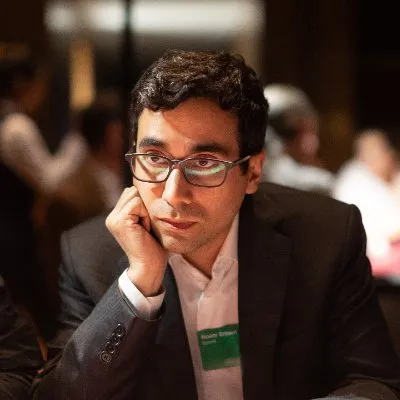
Research scientist at OpenAI working on reasoning, reinforcement learning, self-play and multi-agent AI, and a foundational contributor to the reasoning models...
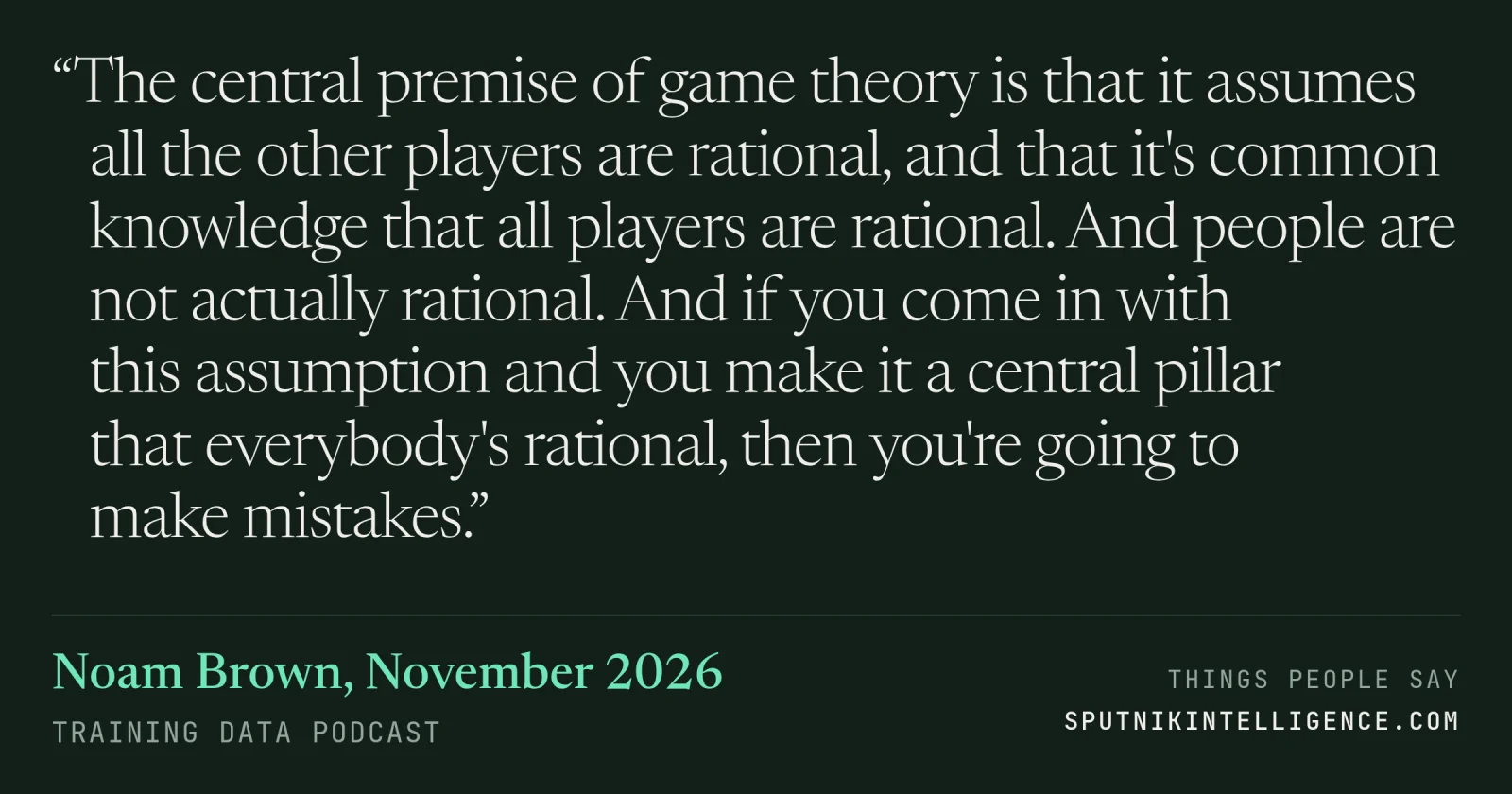
“The central premise of game theory is that it assumes all the other players are rational, and that it's common knowledge that all players are rational. And people are not actually rational. And if you come in with this assumption and you make it a central pillar that everybody's rational, then you're going to make mistakes.”
Training Data · AI Research & Frontier Labs · November 2026
Context
Asked why game theory, built for negotiation, didn't work well in Diplomacy, Noam Brown gives the core reason. It's the argument behind his move away from game theory toward modelling real people.
Transcript
…If we have to spend like five years making an AI that could finally play diplomacy, that's great. So we took it on and we learned a lot along the way. And one of the things that I took away is that actually the game theory approach doesn't actually work that well in diplomacy. I originally came in.
Say more about that because I thought that game theory was developed to actually be a much better negotiator in a repeat game and especially in diplomacy.
I think there is intuition that you can take away from game theory, but the problem with game theory is that it assumes, this is the central premise of game theory, that it assumes that all the other players are rational, and that it's common knowledge that all players are rational. And people are not actually rational. And if you come in with this assumption and you make it a central pillar that everybody's rational, then you're going to do, you're going to make mistakes. And so I think a good example is, are you familiar with the ultimatum game?
Well, you should explain it. So
it's this idea that there's two players, Alice and Bob. Alice has $100 and can offer Bob anywhere between $0 and $100. And Bob can either accept or reject. And if Bob rejects, they both get zero. If Bob accepts, then they split the money that way. So if Alice were to offer Bob $10 and Bob accepts…
Yeah.
More from Training Data