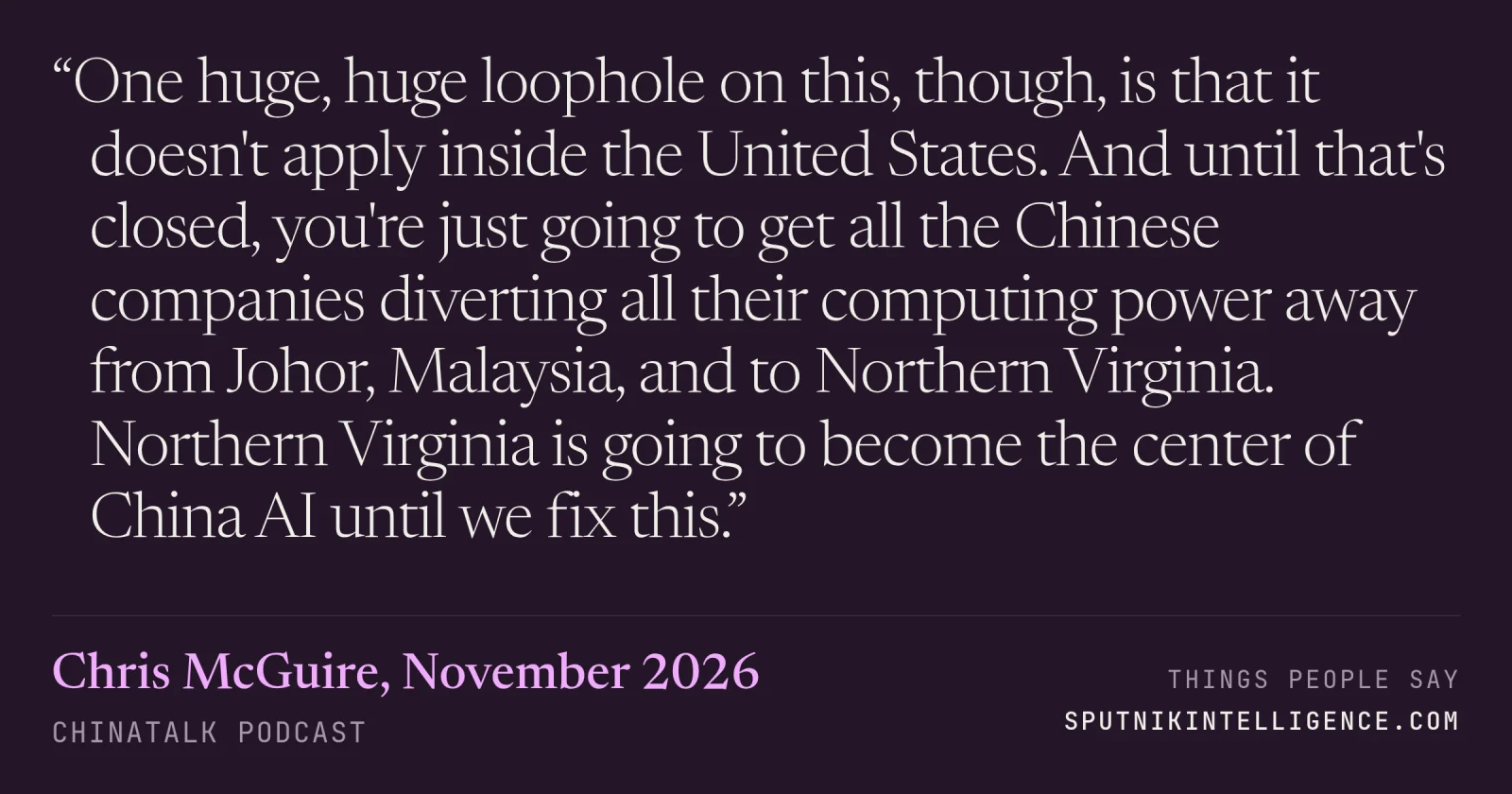
“One huge, huge loophole on this, though, is that it doesn't apply inside the United States. And until that's closed, you're just going to get all the Chinese companies diverting all their computing power away from Johor, Malaysia, and to Northern Virginia. Northern Virginia is going to become the center of China AI until we fix this.”
ChinaTalk · Geopolitics & World Affairs · November 2026
Context
McGuire was walking through the new BIS rule that caps how much compute can be rented to Chinese firms in third countries. He praises it, but says the cap stops at the US border, so Chinese demand would simply move to US data centers.
Transcript
Okay, I think. A little overwhelmed, but hey, like this is like progress. First time in like 18 months that I think we've seen signs of life and actual recognition that AI and export controls matter. So not perfect, but good.
Let's start with what's in the rule. Then we'll do a little meta how this rule got made. And then we're going to bring in Julian to talk about what this could potentially mean for U.S.-China relations. Chris, 132 pages? Pangram says it's all human written. No AI generation. What's in the rule?
Yeah. So, and it's important to know, look, the details here are the story, right? I think there's a lot of fixation that we've had on these affairs or like who wrote the rule or something. This is a huge rule. It's going to impact hundreds of billions of dollars of capital flows and really impacts kind of how the AI industry functions. So understanding it is this is the biggest part of the story, not who slept with who or kind of any of this trivial drama I think people are looking about. So I'd say really there's three categories of things that it addresses. The first is countering Chinese smuggling of AI chips. The second thing is restricting Chinese companies from renting access to AI chips. And then the third is closing loopholes that prevent Chinese companies from making AI chips at TSMC or Samsung or other places. So there's three ways it tries to kind of cut down China's access to compute. I think my top line is, like I said at the start, this is a good rule that actually does move the ball forward. It closes multiple real loopholes. That's positive. It is also imperfect. There are some specific things that I…
Wow. Okay. It's finally here. I mean, just we got to do palace intrigue just for a little bit before we go down the kind of like broader implications of it. I mean, you don't write a 132-page rule over a long weekend. Like this was clearly kicked around for a long time. We had this crazy line in…
It is so striking to see that kind of language in the commerce press release, not because this is the first time in history that the NSC has helped draft a commerce regulation. I'll sort of refrain from comment when I'm here with my former colleague from NSC days, but because it actually, to me…
Yeah, look, commerce has to implement these controls, right? Like you could write them however you want, whoever you want can write them, but ultimately commerce has to implement them and enforce them. And if that isn't going to be taken seriously, and if commerce isn't actually bought in on this…
More from ChinaTalk