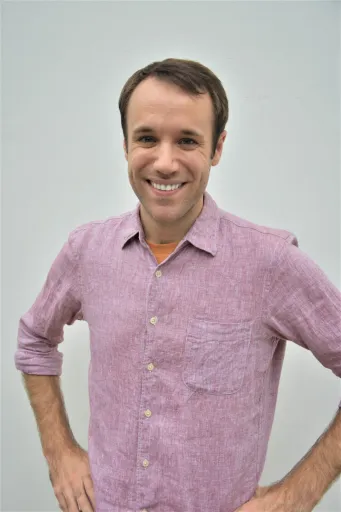
 Lyman Stone
Demographer and director of the Pronatalism Initiative at the Institute for Family Studies, writing on fertility decline, birth rates and the cost of raising ch...
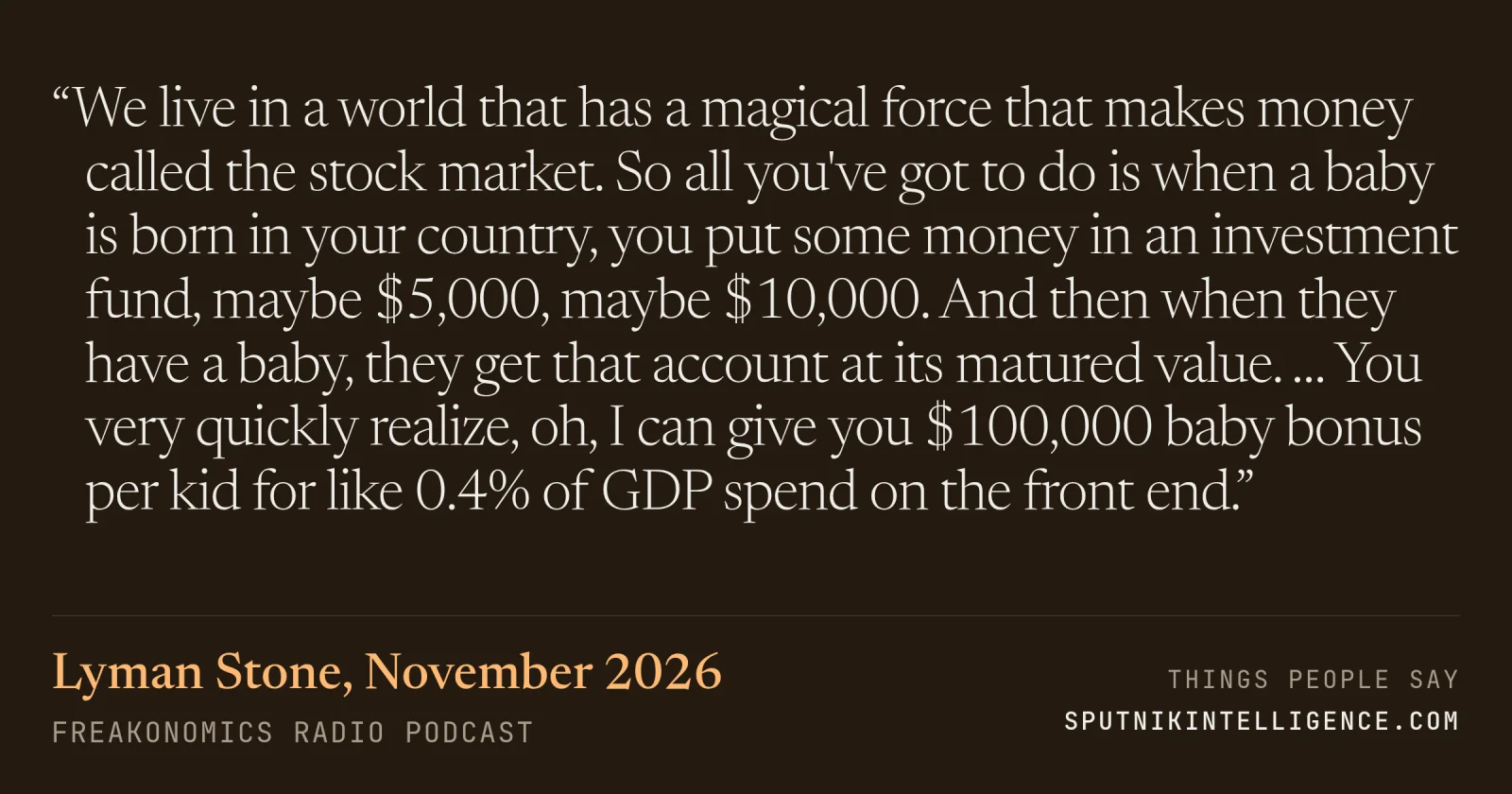
“We live in a world that has a magical force that makes money called the stock market. So all you've got to do is when a baby is born in your country, you put some money in an investment fund, maybe $5,000, maybe $10,000. And then when they have a baby, they get that account at its matured value. … You very quickly realize, oh, I can give you $100,000 baby bonus per kid for like 0.4% of GDP spend on the front end.”
Freakonomics Radio · Ideas & Essays · November 2026
Context
Stone had just estimated that buying replacement fertility with cash checks would cost about 4% of GDP. Asked how else it could be paid for, he proposes seeding an investment account at birth that the child collects only when they have a baby of their own.
Transcript
…fertility would be like $150,000 check for every baby. Like the baby's born, here's $150,000. I would not advise doing that for like a lot of reasons. It's something like 4% of GDP is what you pay for it. So then the question is, could you pay for it another way? And the answer is yes, you could.
Oh, how's that?
We live in a world that has a magical force that makes money called the stock market. So all you've got to do is when a baby is born in your country, you put some money in an investment fund, maybe $5,000, maybe $10,000. And then when they have a baby, they get that account at its matured value. And by the way, if you marry another person who is also born in the same country and has that benefit, then you both get it. You very quickly realize, oh, I can give you $100,000 baby bonus per kid for like, you know, like 0.4% of GDP spend on the front end.
What's this called and where has it been tried?
No one has tried it. There's a proposal to do it in Finland right now called Volvo Sampo, which is a delightful Finnish word that sounds like some elvish technology. And it actually is a reference to the Kalevala, this Sampo device that Vinemoyen uses. But if you're not into Finnish mythology, it…
What do you think of the Trump version of funding for babies born?
More from Freakonomics Radio