 Eric Ries
Entrepreneur and author of The Lean Startup, The Startup Way and Incorruptible, writing and speaking on entrepreneurial management and on how company governance...
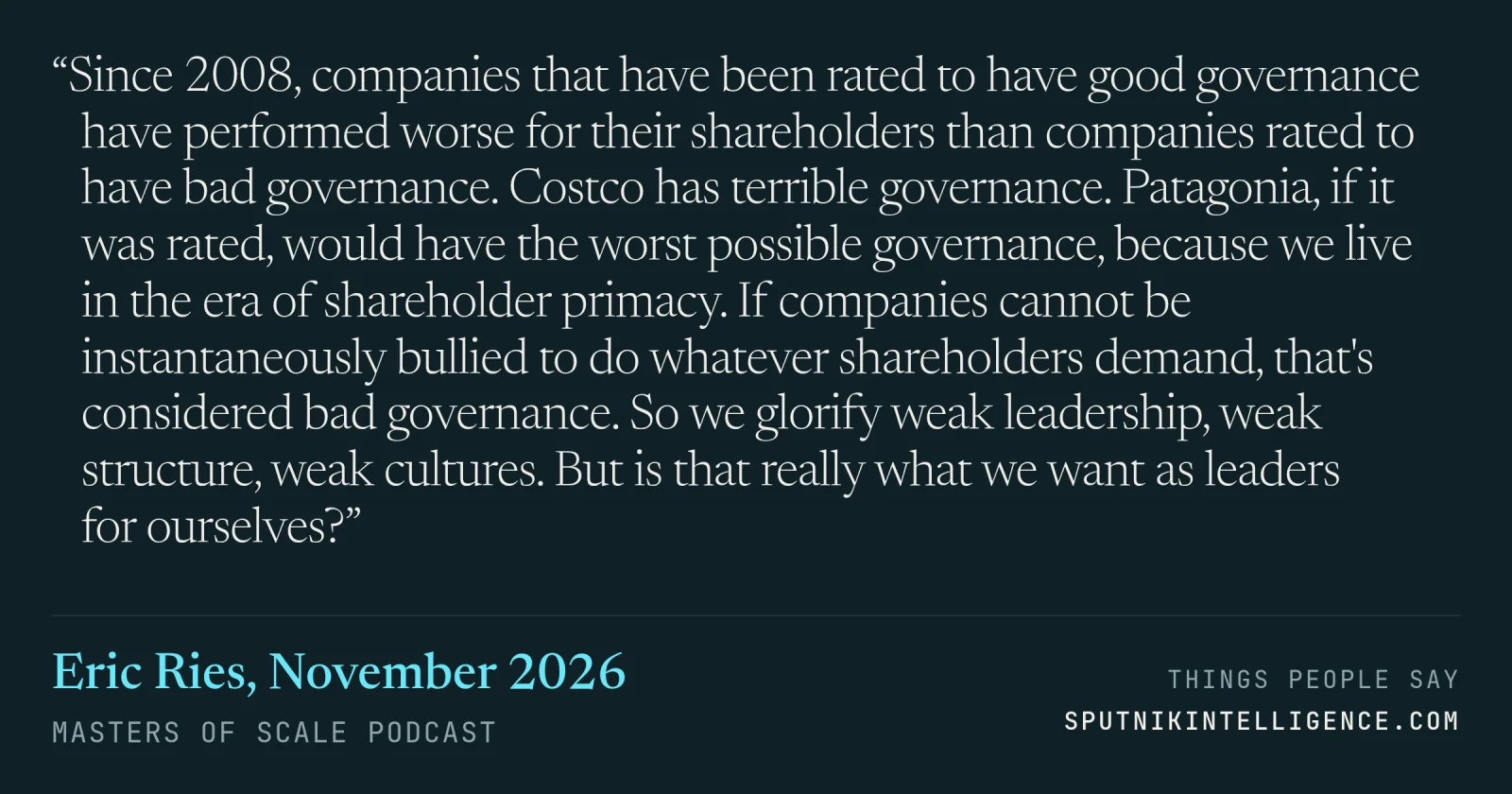
“Since 2008, companies that have been rated to have good governance have performed worse for their shareholders than companies rated to have bad governance. Costco has terrible governance. Patagonia, if it was rated, would have the worst possible governance, because we live in the era of shareholder primacy. If companies cannot be instantaneously bullied to do whatever shareholders demand, that's considered bad governance. So we glorify weak leadership, weak structure, weak cultures. But is that really what we want as leaders for ourselves?”
Masters of Scale · Startups & Venture · November 2026
Context
Eric Ries, on stage with Krista Tippett to discuss his book Incorruptible, argues that conventional business best practices are errors. Citing a chart in the book, he says standard governance ratings point the wrong way.
Transcript
these there's these exceptional organizations that seem to be immune to financial gravity so how can there be exceptions to a rule that's inevitable obviously it's not inevitable there must be conditions under which this happens and doesn't happen anymore so
you're right they violate these these outliers which are multitudinous yeah violate practically every conventional business best practice we've been taught and then period that i in my ignorance used to teach
i i was told they were the best practices best is right in the name so how could they not be the best i of course i taught them that's what they're the best and you one of the hardest things people have to grapple with with this book is like you have to be open-minded to the possibility that you've been taught an error nobody wants to hear that i know i'm sorry but we actually have tremendous evidence there's a whole chart in the book it's just called best practices destroy shareholder value and it's just practice practice and it's not my opinion man these are like there's academic research about these things so for example just to give you one idea to to take home with you since 2008 which is not an inconsiderable data set now companies that have been rated to have good governance have performed worse for their shareholders than companies rated to have bad governance costco has terrible governance patagonia if it was rated would have the worst possible governance because we live in the era of shareholder primacy if companies cannot be instantaneously bullied to do whatever shareholders demand that's considered bad governance so we glorify weak leadership weak structure weak cultures but is that really what we want as leaders for ourselves no
and you also say that there's so many objections that get made right and it really is like it's gravity it's financial gravity yeah yeah exactly it's it's inevitable and you say harder is easier yeah um has anyone stopped to ask why business is like it's so difficult right why is everything so…
yeah this i was really surprised how many stories in the book come down to a a leader who's willing to say like someone comes to you and says look i get that you believe in design or treating people right or not poisoning our customers or whatever but that's so much harder to do it would just be so…
with an ethos with an ethos with which visionaries would recognize it or be proud of it i think is the story you tell well yeah
More from Masters of Scale