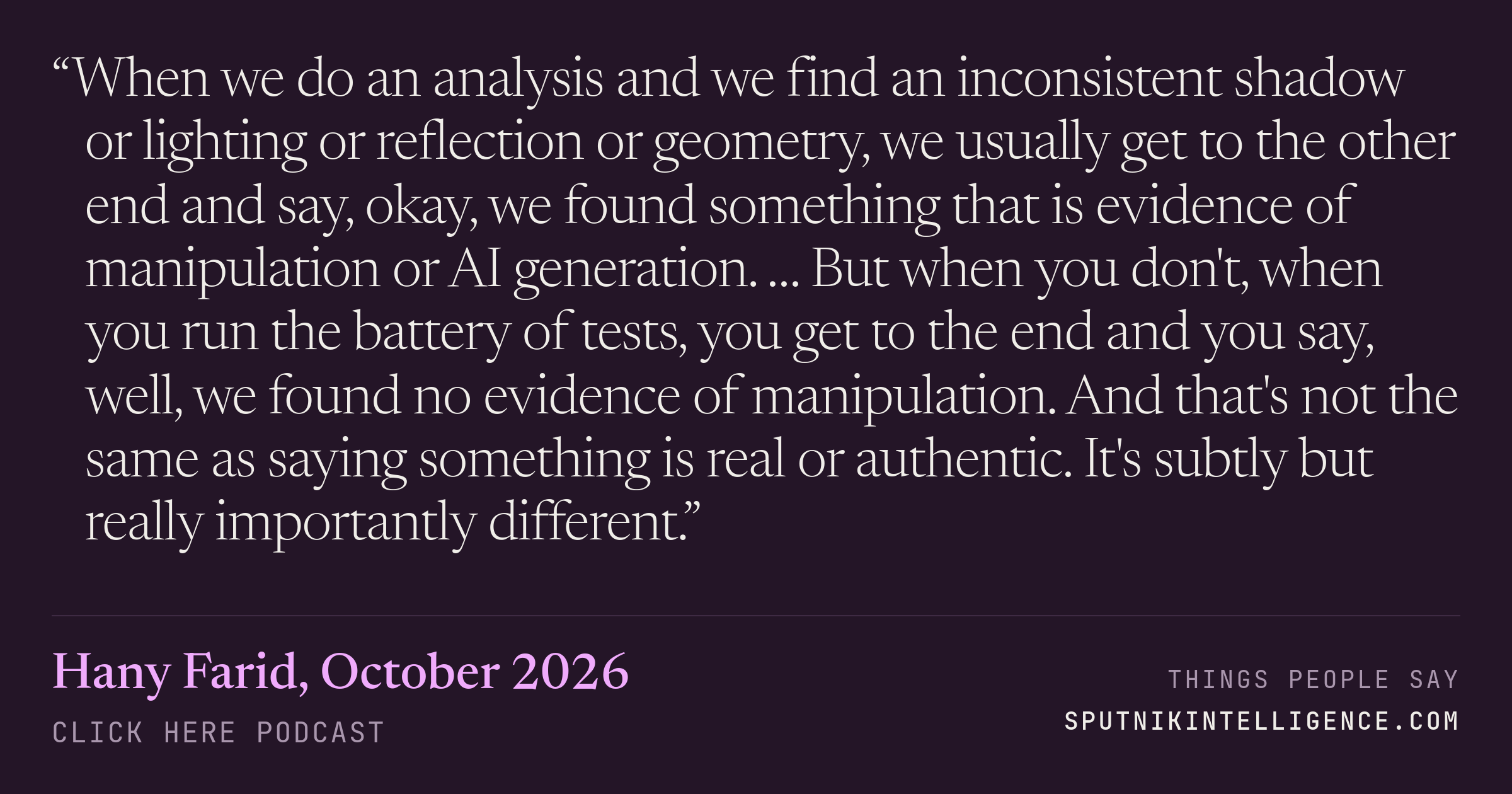
“When we do an analysis and we find an inconsistent shadow or lighting or reflection or geometry, we usually get to the other end and say, okay, we found something that is evidence of manipulation or AI generation. … But when you don't, when you run the battery of tests, you get to the end and you say, well, we found no evidence of manipulation. And that's not the same as saying something is real or authentic. It's subtly but really importantly different.”
Click Here · Software Engineering & Infra · October 2026
Farid, a digital forensics expert, explains why proving an image is fake is easier than proving it is real. The host then points out the loophole this opens: anyone can dismiss genuine footage as a fake.
Transcript
…views. So by the time the fact check goes out there, this content is everywhere. And setting the record straight is exceedingly difficult. I'm far more worried about that aspect of lies than I am about figuring out the truth. Time is not on our side because of the speed at which social media moves.
There's also this strange imbalance. Hani can usually prove something is fake, but proving it's real is a lot harder.
When we do an analysis and we find an inconsistent shadow or lighting or reflection or geometry or some pattern, we usually get to the other end and say, okay, we found something that is evidence of manipulation or AI generation. And you can hang your hand on that. But when you don't, when you run the battery of tests, you sort of get to the end and you say, well, we found no evidence of manipulation. And that's not the same as saying something is real or authentic. It's subtly but really importantly different.
And that distinction has created a rather convenient loophole. Because now, even when there's no evidence that something is fake, you can just say it is. Consider Donald Trump. Back in 2016, a recording surfaced of him talking about women with an access Hollywood host.
I just start kissing them. It's like a magnet. I don't even know what. And when you're a star, they let you do it. You can do anything. Whatever
you want.
More from Click Here