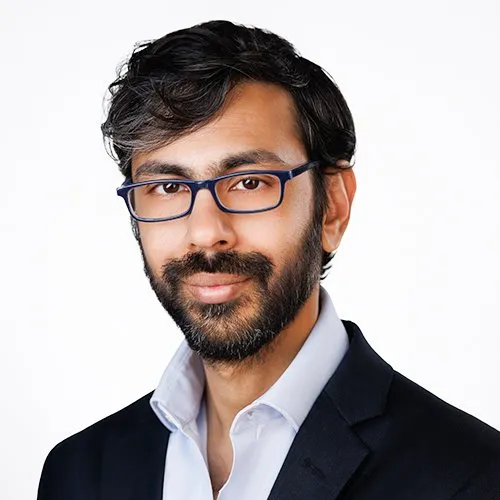
 Aalok Mehta
Director of the Wadhwani AI Center at CSIS, where he leads research on AI policy.
“It certainly seems like a very high-stakes bet. You're betting that one kind of AI will get better at a faster rate than a different kind of AI. I'm not sure we have any prior evidence that can really give us a good sense of whether that's likely to be the case.”
The AI Policy Podcast · Geopolitics & World Affairs · November 2026
Context
A co-host said AI labs sometimes pitch recursive self-improvement as pro-safety: alignment may be too hard for human researchers, so a capable AI researcher might solve it first. Mehta responds to that argument.
Transcript
…if AIs become very powerful. We won't have ways to be able to measure how good they are at things, how deceptive they are, whether they're lying to human beings. It'll just be very, very difficult to do any oversight over them. And so that's the theoretical future that people are worried about. And
…right now. But if we have a super capable AI researcher, maybe AI will be able to crack that problem first or at least make significant improvement in that area, which I don't know if I buy that argument, but yeah, just putting that out there as something that kind of the labs have put forward.
It certainly seems like a very high stakes bet. You're betting that one kind of AI will get better at a faster rate than a different kind of AI. I think I'm not sure we have any prior evidence that can really give us like a good sense of whether that's likely to be the case.
Yeah, certainly. And I want to talk a little bit about kind of reactions to this report. The AI Futures Project, which is the group that previously put out AI 2027 in AI 2040, wrote a blog post
responding to the report,
explaining kind of how this updates their timelines
More from The AI Policy Podcast