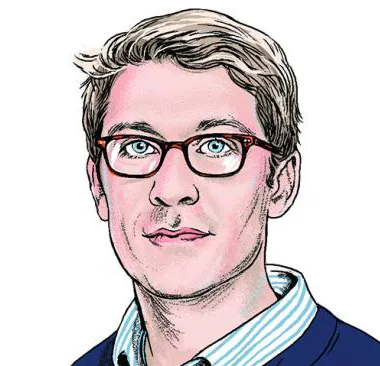
 Owen Zidar
On Bloomberg Surveillance
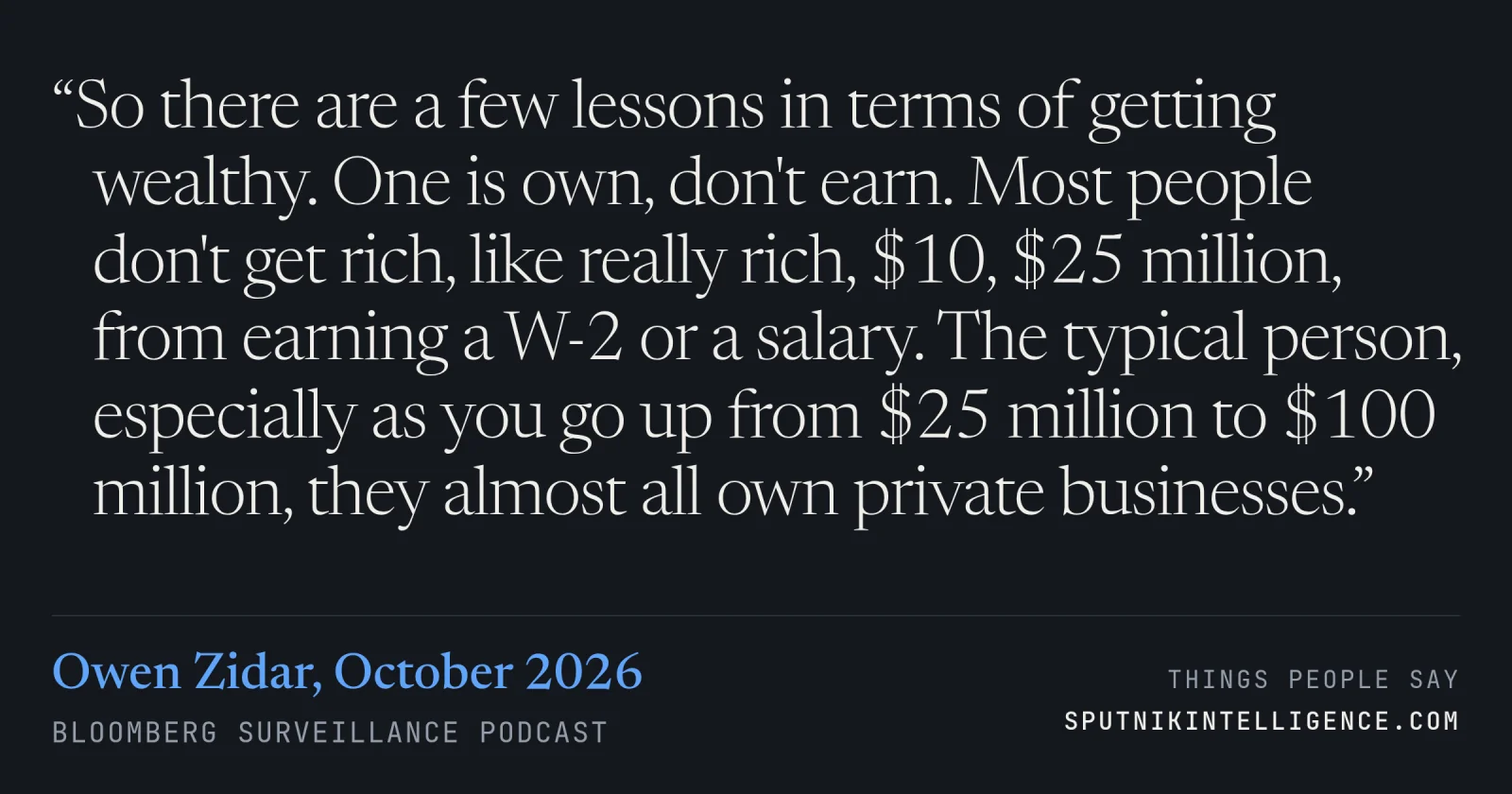
“So there are a few lessons in terms of getting wealthy. One is own, don't earn. Most people don't get rich, like really rich, $10, $25 million, from earning a W-2 or a salary. The typical person, especially as you go up from $25 million to $100 million, they almost all own private businesses.”
Bloomberg Surveillance · October 2026
Context
Asked by the host what a would-be wealthy person should do, the economist and co-author of a book on 'everywhere millionaires' says ownership of ordinary private businesses, not salary, is what creates large wealth.
Transcript
You know, in the book, we have anecdotes like you go to San Antonio and the mayor will say, you know, why are there so many private jets in San Antonio? I've never seen so many private jets here. And it's like, oh, it's the beer distribution conference.
…covers of magazines or anything, or that even get talked about on television. I mean, a lot of these are plumbing businesses, dental practices, things that kind of get overlooked. If I'm determined to become super rich then, I can't rely on my salary job then, right? I need to go and take a risk.
So there are a few lessons in terms of getting wealthy. One is own, don't earn. Most people don't get rich, like really rich. you know, $ 10, $ 25 million from earning a W-2 or a salary. The typical person, especially as you go up from $ 25 million to $ 100 million, they almost all own private businesses like the families of your childhood, Tom.
I look at this, Professor, and it's as simple as you're at a school, and with the media frenzy today, these kids think their starting pay ought to be $ 212, 000 a year, and if I'm not popping $ 450, 000 after three years, I'm a failure. How do we adapt to a younger generation that's talked…
I think the definition of success right now is just really narrowed, and one of the goals of the book is to broaden the aperture to say— And you succeeded at that.
I hope, being on shows like this.
More from Bloomberg Surveillance