
H"
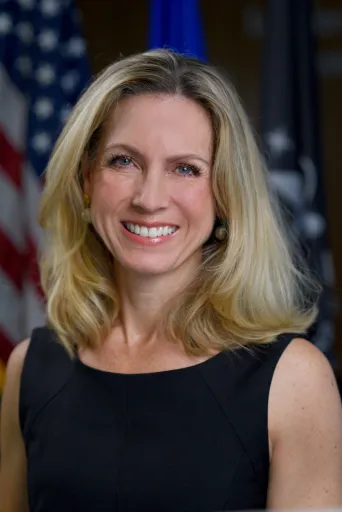
Heather "Lucky" Penney

Heather "Lucky" Penney

Things Heather Says on Podcasts

Director of Research at the Mitchell Institute for Aerospace Studies, focused on Air Force force structure, command and control, unmanned systems, autonomy and the defense industrial base. Flew F-16s with the Washington, DC Air National Guard and spent over a decade in the defense industry on budgets and program execution. Hosts The Aerospace Advantage, the Mitchell Institute's podcast, where episode credits list her as host.

Where to Find Them

Heather "Lucky" Penney hosts The Aerospace Advantage .

Recently: “What do the Election Results Mean for Defense? The Rendezvous — Ep. 315” on The Aerospace Advantage (November 2026); “Jimmy Stewart: The Combat Airman — Ep. 314” on The Aerospace Advantage (October 2026); “Want AF Airpower? Understanding Force Presentation — Ep. 309” on The Aerospace Advantage (September 2026); “The Readiness Challenge: Can AI Help? — Ep. 308” on The Aerospace Advantage (September 2026); “Air Combat Propulsion Update: Innovator Perspectives — Ep. 307” on The Aerospace Advantage (September 2026); “Allied Airpower Perspectives: Brig Gen Pierre Gaudillière, Commander of the French Air Combat Command — Ep. 294” on The Aerospace Advantage (June 2026).

What They Said

“It's a clear mimicry of what Ukraine has done. But the way that Ukraine is fighting is very different from the way that we fight war. And combatant commanders generally are not in charge of their own acquisition. They receive their forces from the services who do the organize, train, and equip.” — Heather "Lucky" Penney, The Aerospace Advantage

On the newly announced Autonomous Warfare Command, she argues it copies Ukraine's drone-war model without fitting how the US military buys and assigns forces.

The Aerospace Advantage · 2026-11-07 Permalink → Listen →
The Aerospace Advantage Around 45:35 into the episode
Heather "Lucky" Penney

Yeah. Doug, recently, Secretary of War, Pete Hegseth announced a new major command, Autonomous Warfare Command. They're calling it AutoWarcom. I've heard folks call it Robocom. What are your thoughts on this?

Speaker 4

…get the acquisition piece. I mean, heck, the Air Force tried this when they first brought on RPAs and there was that rush in the early 2000s and it was kind of a hot mess. That I can see making sense, but there are some lines you don't want to cross because I think it would actually set us back.

Heather "Lucky" Penney

Yeah, I know. To me, this seems like one of the lessons learned from Ukraine that probably doesn't make sense. Because to me, I look at this and I go, it's a clear mimicry of what Ukraine has done. But the way that Ukraine is fighting is very different from the way that we fight war. And combatant commanders generally are not in charge of their own acquisition. They receive their forces from the services who do the organized, train, and equip. And so now you're taking the organized, train, and equip, you're burdening AutoWARCOM with all of that. And then the question becomes: how do you integrate their operations with the other combatant commands? It's certainly not a geographic combatant command. And functionally, it doesn't make sense because it has to be integrated with all of the other domains in an actual conflict in a geographic command. So there's so much about this that seems really not thought through and is going to be very clunky. And as you mentioned, is this just quadcopters or is this something like CCA? How do we integrate naval unmanned assets, whether or not…

Speaker 4

Yeah, sure. So first of all, it's important to recognize that this has been a huge push for the Space Force. It's really essential to their development as a warfighting service. General Saltzman, the prior CSO, made a huge push to stand these up and to man them. And, you know, there's still more…

Heather "Lucky" Penney

that's a unique piece.

Speaker 4

Yeah, and how it'll, but how it will affect what is still retained by the Space Force, but also how it interfaces with U.S. Space Command, which is obviously where you'd expect the majority of space forces are assigned. So that report has not, to my knowledge, been published, but presumably it has…

Speaker names come from our own diarization. The position is estimated from where the line sits in the episode.
“It shouldn't take an act of heroism to fill combat lines. The heroism should come when you're over bad-guy land.” — Heather "Lucky" Penney, The Aerospace Advantage

A guest had said the services keep succeeding at the "ragged edge" on the backs of airmen and guardians. She replies that the force shouldn't need heroics just to staff its units.

The Aerospace Advantage · 2026-11-07 Permalink → Listen →
The Aerospace Advantage Around 57:16 into the episode
Heather "Lucky" Penney

…too long. And it's not going to be easy and it's not going to be cheap, but they have to understand that this is an imperative to steward the service and take it into the next decade. They've got to make those investments now. That's, you know, and that's going to come down to buying more stuff.

Anthony Lazarski

…airmen and guardians. So we run a risk sometimes when we sit down there and say, hey we're at the ragged edge and if we don't get this you know we're gonna fail but yet we continue to succeed but it's off the backs of our airmen and our guardians and and i agree with you but it's it's yeah you know

Heather "Lucky" Penney

exactly laser they they do themselves um they really are just amazing and but it shouldn't take an act of heroism to fill combat lines the heroism should come when you're like over a bad guy land

Speaker 4

it's also why they actually have to open up about what's going on some of the current ops because they've got to be clear-cut about some of the risks being taken if we're going to have solutions because it's uh it's a little different than what some of the public statements have been

Heather "Lucky" Penney

yeah all right folks thank you so much for being here it's been great to have you on

Speaker 2

thank you so much what a great episode thanks and uh see you next time

Speaker names come from our own diarization. The position is estimated from where the line sits in the episode.
“We've proven with the Raptor that a silver bullet small fleet is a recipe for breaking the force. So when it comes to F-47, we've got to at least get to 250. And I'd argue that 500 is probably closer to the actual number you need when you take into consideration simultaneity and the geographies of global engagement. Because the fact of the matter is, one jet cannot be in more than one place at one time.” — Heather "Lucky" Penney, The Aerospace Advantage

Walking through the Air Force's new fighter report, she argues the F-22 fleet was worn out because it was too small, and that the next-generation F-47 fleet must be far larger than the report implies.

The Aerospace Advantage · 2026-11-07 Permalink → Listen →
The Aerospace Advantage Around 36:42 into the episode
Heather "Lucky" Penney

…are taking longer to go through depot, and that means they've got a backlog at depot. And that means you don't have the 18 to 24 aircraft at the fighter squadrons. And these health metrics are not going to get better with time. Aircraft will only get older. So these Vipers have to be replaced now.

Speaker 4

…demand, with concurrency all the time. That is just a steady state. And so I would just want to make sure that those floors account for that real-world demand, not what makes sense on an Excel spreadsheet to meet a budget top line saying one major theater only. Yeah, it's never worked that way. No,

Heather "Lucky" Penney

…on the F-22. You know, at 187 jets, there was not enough jets for training, test, backup inventory, attrition reserve, or even really simply a rotational presence. There's been so much demand from combatant commanders for F-22. That fleet has been rode hard. They're a high-demand, low-density asset, and that has really worn the force prematurely. So we can't have F-47 be a silver bullet force. We've proven with the Raptor that a silver bullet small fleet is a recipe for breaking the force. So when it comes to F-47, we've got to at least get to 250. And I'd argue that 500 is probably closer to the actual number you need when you take into consideration simultaneity and the geographies of global engagement. Because the fact of the matter is, one jet cannot be in more than one place at one time. And quantity will be key to sustainability and more importantly, combat success. Laser Sledge, what are your thoughts to add? I mean, a lot of congressional delegations are tracking this topic, given the advanced age of fighters and the need to recapitalize, and just to be honest, bases in their districts.

Anthony Lazarski

They are tracking it. And it's not just by congressional delegations. You got to look at the committees because that's where your professional staff are. That's where the people that have been working this with the Air Force and the Space Force and all the other services for a long time. So they…

Heather "Lucky" Penney

Hey,

Speaker 4

that's very fuel-efficient aircraft.

Speaker names come from our own diarization. The position is estimated from where the line sits in the episode.

Collections They Appear In