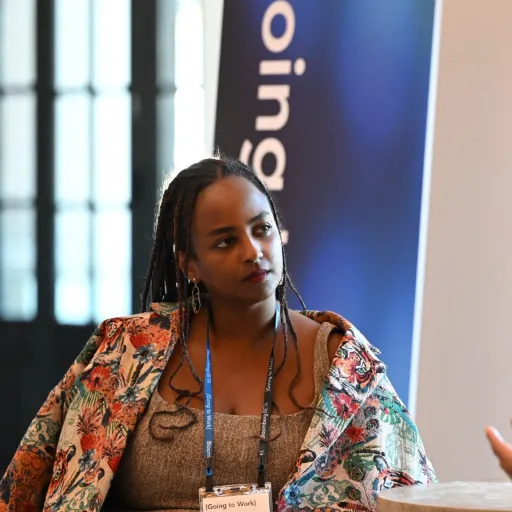
“Young people used to be the optimists about the economy. It's pretty recent. If you look at the Michigan surveys that you've been talking about, young people being more pessimistic than older cohorts has occurred in under 3% of monthly Michigan surveys since 1978. This is a very recent phenomenon.”
sputnikintelligence.com
The panel was trying to explain why Gen Z is so gloomy about the economy. Jerusalem Demsas uses the long-run University of Michigan sentiment data to show how unusual it is for the young to be more pessimistic than their elders.
…about why sentiment wasn't tracking the economic fundamentals anymore. And I think that what you said about people feeling like the current situation is unfair, irrespective of their relative position to people from previous generations or like a decade ago even, is I think a core part of this.
…the AI buildout. And they're saying, none of this seems right to me. And therefore, I'm not feeling so good about the economy, even if things, you know, by the data, by the metrics, is fine. You know, obviously, people have some elements of discontent that it does us good to try to understand that.
Something that's, I think, not super, I think, maybe well understood in the current moment is that young people used to be the optimists about the economy, right? Like, it's pretty recent. Like, if you look at Galluping, job market optimism, et cetera, is like really, really bad and really low from young adults. But if you look at like the Michigan surveys that you've been talking about, like since 1978, like young people being more pessimistic than older cohorts has occurred in under 3% of monthly Michigan surveys since 1978. Like, this is a very recent phenomenon. And I just, I think it's, it's hard because I'm like pulled in both directions. Like, part of me is like, I have like some level of the matte take in me where I'm just sort of like, I'm confused. Like, I, if you were to ask me about being in my 20s at any point since 1978, I don't think this is when I'd pick like the worst time to be in my 20s. But I also think that there's something maybe missing about how people are perceiving what their opportunities are in the future. And in this specific moment, I think AI…
Yeah. I mean, it's a mystery. Like I've been saying, like, people, Jared Bernstein wrote a whole paper trying to get to the bottom of it. Joanne has been trying to get to the bottom of it over at the University of Michigan. And I think, you know, Joanne has pointed to potentially social media not…
I'm really struck by the negativity dynamics on social media that every so often I will fire up Twitter and I'll be scrolling and so often.