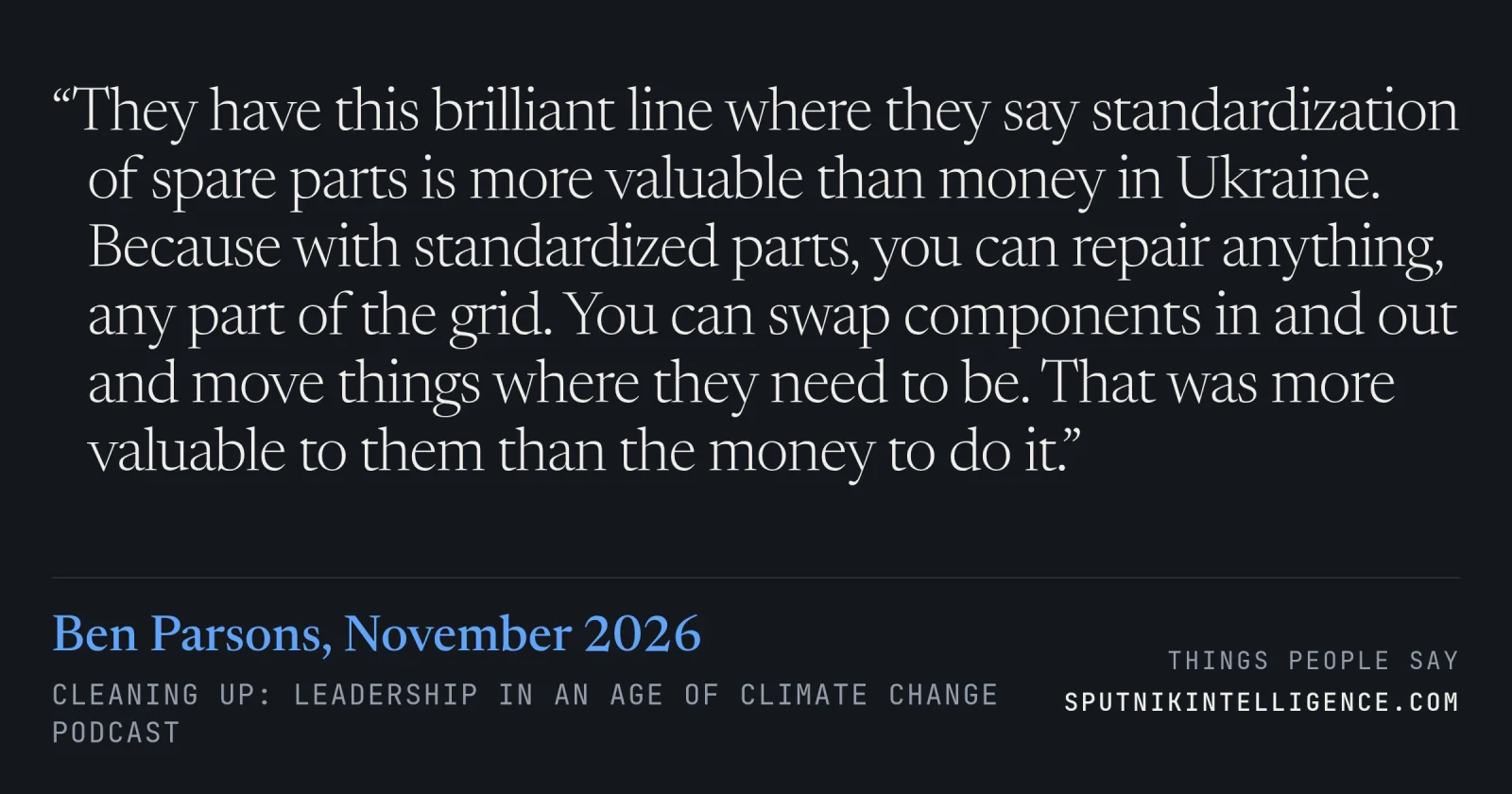
Parsons is quoting a report by a Kyiv think tank on how Ukraine keeps its grid running under attack. The point is that being able to repair grid equipment quickly matters more than funding.
…flexible assets that can respond very, very quickly and help them reroute power and change how the grid operates. Another really striking thing is something like standardization. There's a brilliant report by Dixie Group, and we can put it in the show notes that talks about lessons from Ukraine. So
just for clarity, Dixie Group think tank based in Kyiv doing lots of work around the economic challenges associated with this conflict.
That's right. And they have this brilliant line where they say standardization of spare parts is more valuable than money in Ukraine. Because with standardized parts, you can repair anything, any part of the grid. You can swap in and swap out components and move things where they need to be. That was more valuable to them than the money to do it. Fascinating.
Yes, and of course, standardization is kind of hard when a large part of what you're doing is living off donations. Because, okay, financial donations, you can buy what you want, although you're in competition, of course, with data centers and all these other people who want transformers and cable…
And this is where we've got this opportunity because we're not at war. We're not in the same active conflict that Ukraine is. We have the luxury of peacetime to really think about this properly. And none of this is new. So your friend Amory Lovins, that I know has been on the show, wrote a book…
it's interesting. You went exactly where I was going to go. What is the cost difference? Because I've talked about if you build a big centralized power station, maybe you modularize it and maybe that adds, I'm going to guess, 5% or 10%, possibly, by the way, a lot less. Over a lifetime, including…