Liebreich and guest Jan Rosenow spend the episode on what they call the primary energy fallacy — counting the coal and oil that goes in rather than the useful energy that comes out, which makes the switch to electrification look far bigger than it is. Rosenow replies with a story about posting a Sankey diagram of rejected energy and getting a very senior European Commission official asking staff why nobody had told them about it.
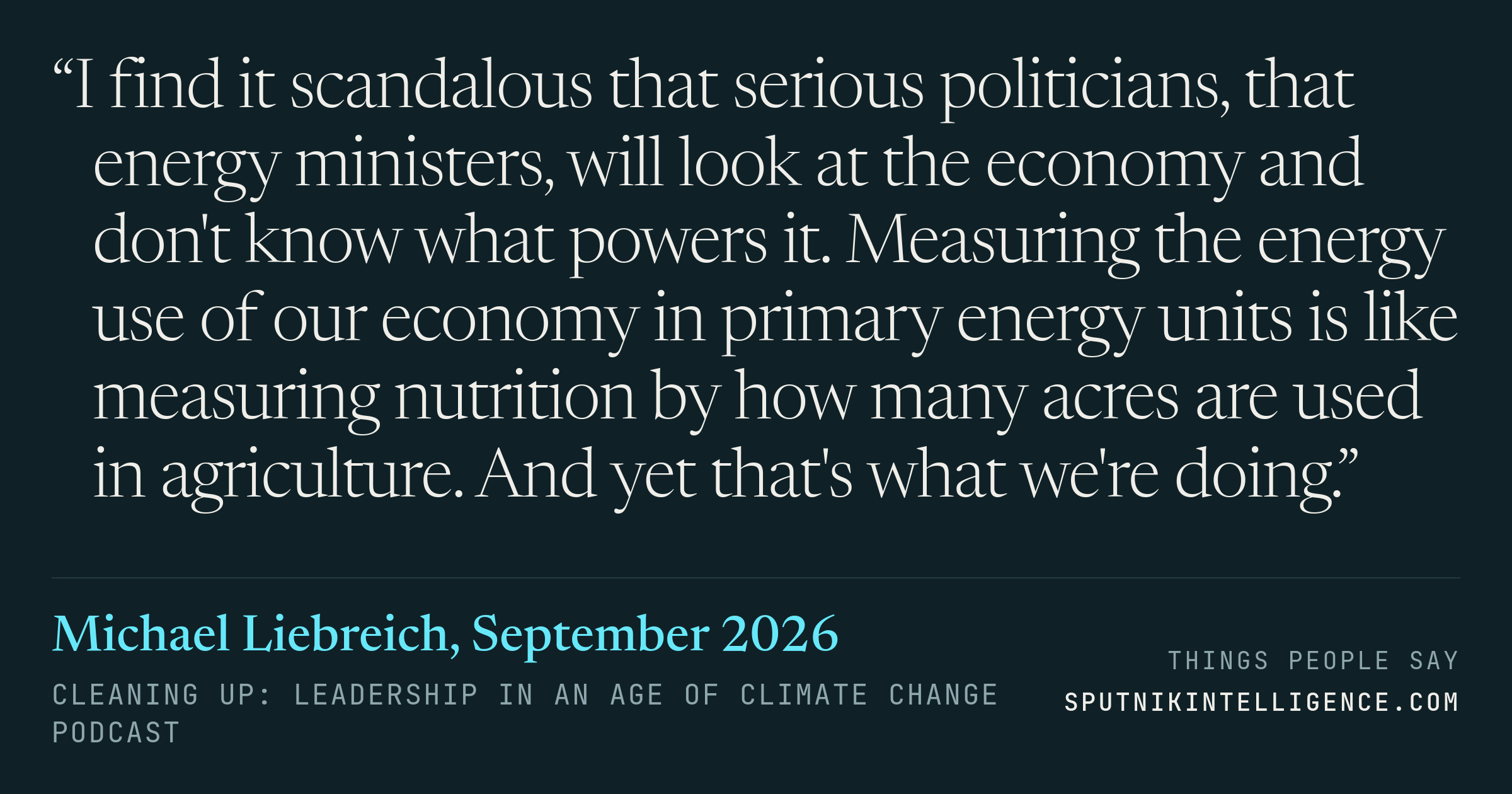
I find it scandalous that you actually look at the economy, that serious politicians, that energy ministers will look at the economy and don't know what powers it. Measuring the energy use of our economy in primary energy units is like measuring nutrition by how many acres are used in agriculture. And yet that's what we're doing. Don't you find it just astonishing?
It is. And when I posted the Senke diagram from Lawrence Livermore lab at some point, someone in the European Commission, very senior, that person asked their staff, why has no one told me about this? That person wasn't aware that we have these huge losses, this huge amount of rejected energy. And that's someone who is running an organization that is in charge of regulating the energy system, which to me just says we haven't had enough conversation about this very topic.
Hello, I'm Michael Liebreich and this is Cleaning Up. Energy discussions can seem to be dominated by engineers presenting technical solutions, politicians talking in generalizations, lawyers and consultants having a field day, regulators left doing their best to keep the lights on, and investors refusing to put money to work unless they receive guaranteed returns. Regular listeners will have heard me talking about the importance of systems thinking to break this logjam. Before we build any complex machine, we need to know what it is we actually want it to do. How do we want to run it? And how is it meant to fit together? But what does good energy systems thinking look like? How do you learn it? How do you teach it? How do you communicate it? I don't know the answers to these questions, but I do know a good energy systems thinker when I meet one. And my guest today is one of the best. He is Professor of Energy Transition Climate Policy at the University of Oxford, where he leads the energy program at the Environmental Change Institute. He also serves as a Jackson Senior Research Fellow at Oriel College in Oxford. Please welcome Jan Rosenow to Cleaning Up. Jan, thank you so much for joining us here today.
It is an absolute pleasure, Michael.