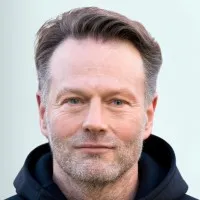
Henrik Werdelin

Things Henrik Says on Podcasts

Entrepreneur and startup studio founder who cofounded BARK and Prehype, the studio behind companies including Ro and Audos. Earlier he was an Entrepreneur in Residence at Index Ventures and head of product development at MTV International. His books include The Acorn Method and Me, My Customer, and AI, coauthored with Nicholas Thorne. Cohosts Beyond the Prompt with Jeremy Utley, a podcast on how companies adopt AI. Has been a guest on The Daily Stoic, AI & I, My First Million and The Mello Millionaire.

Where to Find Them

Henrik Werdelin hosts and writes Beyond The Prompt - How to use AI in your company . They have also been a guest on Mostly Human with Laurie Segall , The Daily Stoic , Proven Podcast , The Mello Millionaire with Tommy Mello , AI & I , More or Less and My First Million .

Recently: “There's No 'Better Time to Bet on Being An Entrepreneur'” on Mostly Human with Laurie Segall (November 2026); “Beyond the Prompt: The Human Advantage Live AMA” on Beyond The Prompt - How to use AI in your company (November 2026); “What Happens When the Jobs Stay but the Work Changes? Refounding Zapier with CEO Wade Foster” on Beyond The Prompt - How to use AI in your company (October 2026); “⁠Do You Know Yourself Well Enough to Let AI Make Decisions for You? - with Nicholas Skytland Former NASA chief technologist” on Beyond The Prompt - How to use AI in your company (October 2026); “What Will You Do With the Time AI Gives Back to You? - with Alex Kuilman, Founder of The Practice” on Beyond The Prompt - How to use AI in your company (September 2026); “What Will You Do With the Time AI Gives Back to You? - with Alex Kuilman, Founder of The Practice” on Beyond The Prompt - How to use AI in your company (September 2026).

What They Said

“If I said to an LLM, what is the next business that BarkBox should do? I bet you it'd say it should make a cat box, right? Because it is the most predictable idea you could throw at it… And so we went to do an airline, which is probably also a bad idea, but at least a different battle. And it's more original.” — Henrik Werdelin, Mostly Human with Laurie Segall

Asked what 'original' means when everyone has access to the same models, Werdelin, a BarkBox co-founder, gives his own example of what a model would and wouldn't suggest. His point is that models default to the most predictable idea.

Mostly Human with Laurie Segall · 2026-11-05 Permalink → Listen →
Mostly Human with Laurie Segall Around 34:13 into the episode
Speaker 3

…pharma, if you're thinking about finance or defense, I think a lot of all these big businesses that feel very certain that they can just keep doing what they did yesterday is going to have a surprise when the AI entrepreneur workforce kind of come in and try to nibble of their good businesses.

Speaker 1

…a lot of this. And her name is Sandra Matts. And she was talking about how AI, if we're not careful, makes us all a little more similar. It suggests safer choices. It guides us towards kind of the middle, taking out the special sauce if we're not careful. So how do we all put on our Ironman suit?

Speaker 3

So I think, so firstly, thank you so much for the nice compliment. I'm not a super naive person. I also realize that what we're trying to do has endless amount of flaws and it will be very difficult. I do think that what we learned with social media is that the best way to predict the future is to make it. And we have to take, we have to be very, we have to be very serious about what we're building because obviously we've done a few things that wasn't just great. And so I think that we have a lack of originality with what is the good case for AI. I think a lot of us very fast go to places in our brain of like, what does it look like when it goes wrong? And I think it's quite easy to kind of see all those kind of paths and imagine those futures. I think what we as people who like technologies and who love newness. need to become much better at is like, okay, let's just come up with cool shit that will kind of make this be awesome for a lot of people. And I think I'm definitely putting my hand up and saying, I'm going to give that a go and we'll see if it works out. Now, back to the original…

Speaker 1

Right. I love this idea that actually the human is the special sauce, right? If you're able to be original and come up with those ideas. And I like that idea of the human in the loop. I'm very curious when we talk about BarkBox and how AI would have told you to do catbox, but you decided to create…

Speaker 3

I don't know what would be right and what would be wrong. I think, you know, my solution for that specific problem was I think other people have sought to build a cat box and that for many reasons have seemed not to be a good solution. Like our friends over at Harry's tried to do that at one point…

Speaker 1

Well, it is interesting. It's because AI does. It's trained on data of what existed. And if you want to create a company that answers your question, oh, God, it sucks that, you know, fill in the blank. There's a good chance that that doesn't exist yet. And so using AI as an infrastructure just to…

Speaker names come from our own diarization. The position is estimated from where the line sits in the episode.
“There's a difference between building a product and building a business… I think what most people find when they build a product is that that doesn't make them a business. That just makes them a cool website that nobody might ever see.” — Henrik Werdelin, Mostly Human with Laurie Segall

Asked how his platform Audos works for a newcomer, Werdelin says AI coding tools have made building a product easy. The hard part, which Audos focuses on, is finding a customer and a problem and getting traction.

Mostly Human with Laurie Segall · 2026-11-05 Permalink → Listen →
Mostly Human with Laurie Segall Around 21:26 into the episode
Speaker 3

…And so I don't think it's one or the other, but I do think it's important that both stories are available. And so I've read a lot about these one people unicorns. I think it's intellectually interesting. I think it's better for society if we can also make a million people make a million dollars.

Speaker 1

…are like, what are they talking about? Like, how exactly does it work? Like, if you could, like, I pretend I know absolutely nothing and I go and I am a small business owner and I want to start a company based on my expertise. I just don't really know how. How exactly would I go about using Autos?

Speaker 3

…between building a product and building a business. I think what we made a bet on a few years ago was that building a product would increasingly be easier. And I think that bet has really paid off. I think after Claude Code, it became clear that a lot of the foundational models now build code incredibly well. And so I think there's a lot of different places where you can go and build a product. I think what most people find when they build a product is that that doesn't make them a business. That just makes them a cool website that nobody might ever see. And so what we do is that we try to take people by the hand and then walk them all the way through the whole path of saying, I don't know what to come up with yet. Let's kind of like figure out a customer you'd like to serve. We have this framework called the five Ps, which is basically ways where you can kind of figure out who might be a good customer for you to serve. We wrote a book about it…

Speaker 1

Wow. That's super interesting. And it just, it's almost just kind of like a, you know, and it's hard to explain it to people who are listening and can't see it, but it is. It's like a co-founder that kind of takes you through like as if you had a group of Silicon Valley entrepreneurs and investors…

Speaker 3

For sure. And I think that is the big point. Now, this doesn't make it easy peasy, right? Like I think a lot of people build stuff and then interesting happens when you go from idea to actual execution. Like I was helping somebody who wanted to build a business helping people find like a good care…

Speaker 1

And so how do the finances work for you guys? Because you're not a venture studio. This isn't a venture capital business. These aren't venture capital outcomes. What's in it for you?

Speaker names come from our own diarization. The position is estimated from where the line sits in the episode.
“I really cannot think of a better time to bet on being an entrepreneur. I think it used to be that we thought if I got a job in a big company, I would be fine. I think what we've seen the last 10 years is that that is not the case… you have people, which my co-founder calls the unknowingly unemployed, the people that sit in a job, but that job might not even be there anymore, even though they're still there.” — Henrik Werdelin, Mostly Human with Laurie Segall

Laurie Segall asked whether mass entrepreneurship is the future. Werdelin argues AI is eroding the safety of corporate jobs, and this answer gives the episode its title.

Mostly Human with Laurie Segall · 2026-11-05 Permalink → Listen →
Mostly Human with Laurie Segall Around 42:52 into the episode
Speaker 3

…do the work. And then we, in whatever form, are going to get some kind of money back from that. And I think we as humans are incredible and that we should use all our creativity and all our agency and agitation and whatever nervous energy and all the stuff that drives us to go out and do something.

Speaker 1

Is mass entrepreneurship the future?

Speaker 3

I think it is. I really cannot think of a better time to bet on being an entrepreneur. I think it used to be that we thought if I got a job in a big company, I would be fine. I think what we've seen the last 10 years, that that is not the case. I think you have all these people quitting for these other reasons. I think you have people which my co-founder call the unknowingly unemployed, the people that basically sit in a job, but that job might not even be there anymore, even though they're still there. And then I think there's all the stuff that AI is going to displace. Now, if you have agency, if you have the ability to connect with other humans, if you have the ability to tell a story and you have ability to go out and solve a problem with technology, which I think everybody has, I think those co-entrepreneurial attributes is something that is not going to go out of fashion.

Speaker 1

In five years, is founder going to be a mainstream job category almost like the way that a creator or a freelancer has become?

Speaker 3

I think so. And I think it's because, you know, like let's just take like applying, having somebody apply for a job. If you put up like a job posting for an internship, you would get, I would imagine, hundreds, if not thousands of applications. And I bet you most of them are going to be written…

Speaker 1

You know, it is so interesting to see you build this because, how do I say this in a nice way? Like it's not sexy, you know? It isn't flashy. It isn't, oh, we're going to help. This isn't the billion dollar story. This might not even be the million dollar story. You want it to be the million dollar…

Speaker names come from our own diarization. The position is estimated from where the line sits in the episode.

Collections They Appear In