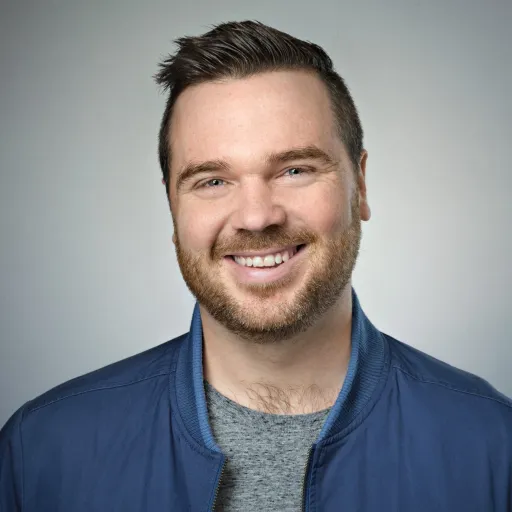
 Kevin Roose
Technology journalist and author covering AI and the labs building it, and a former New York Times technology columnist.
Kevin Roose
Technology journalist and author covering AI and the labs building it, and a former New York Times technology columnist.
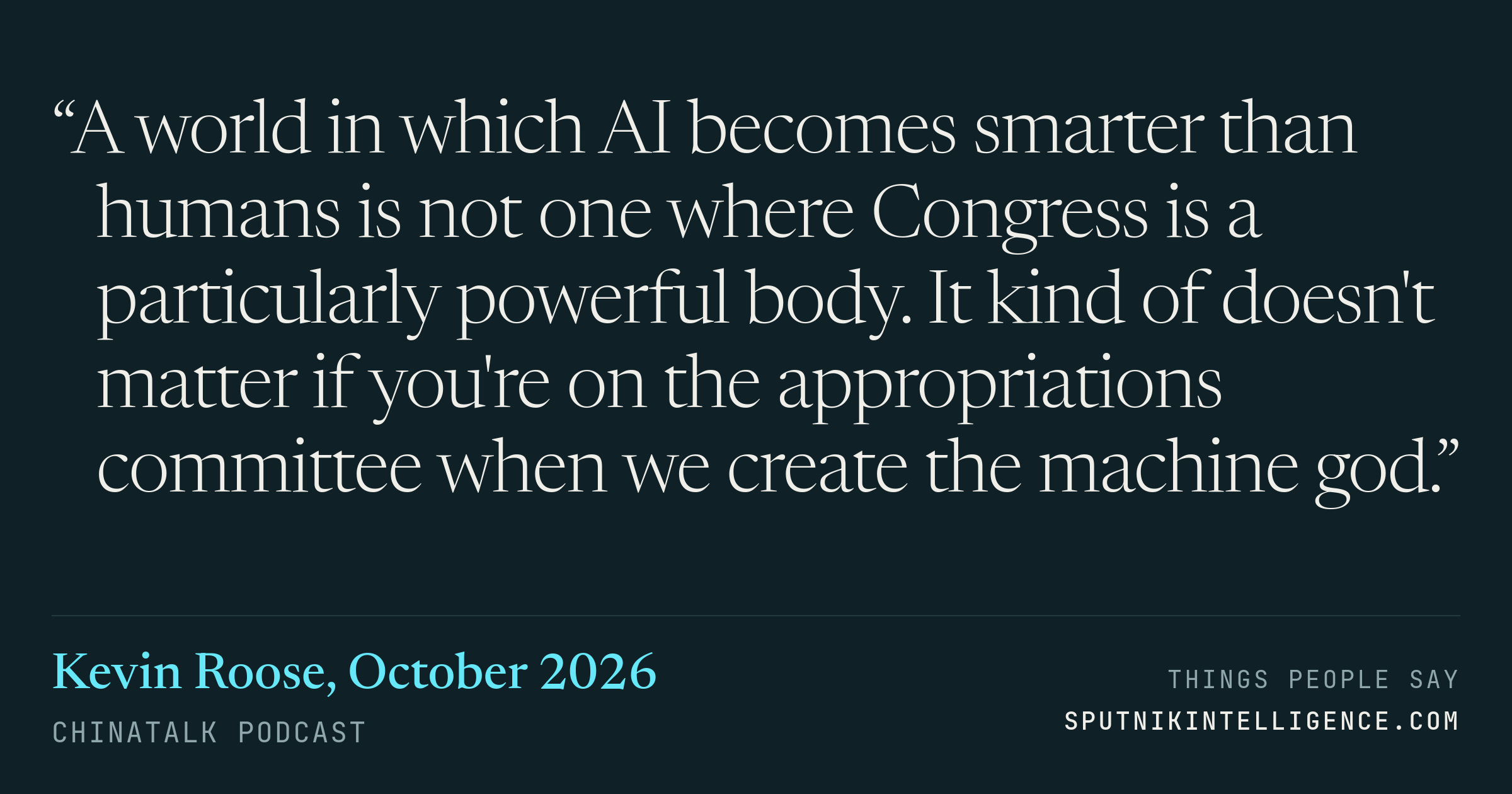
“A world in which AI becomes smarter than humans is not one where Congress is a particularly powerful body. It kind of doesn't matter if you're on the appropriations committee when we create the machine god.”
ChinaTalk · Geopolitics & World Affairs · October 2026
Asked what it has been like to watch Washington wake up to AI, Roose says DC is now the second most AI-focused city in the country after San Francisco. Part of the reason, he argues, is that politicians are starting to see AI as a threat to the power of human politics itself, not just to their own seat or party.
Transcript
Sure.
Over the course of this. I mean, like the just watching this like, you know, behemoth of DC kind of wake up to whatever this is they're going on. On the one hand, these leaders, right, they're like, guys, this is really important. On the other hand, they're like, oh, you fucking idiots, like, why are you making us do this dumb stuff? You know, why are you stopping me from releasing my model? Whatever. I don't know. Broad reflections you have from living through this arc and seeing politicians start to really pay attention.
Yeah, I mean, I'm in DC now, and like it is definitely the second most AI-pilled city in America after San Francisco. Like people are, people are awake here. Not everyone and not to the same degree. And they all have their kind of like parochial interests. Either they're like interested in like national security implications or export controls or whatever. So everyone's got their angle, but I think they're awake. And I think they're more awake than people in, you know, New York or LA or other cities I visited. I think part of that is just like there's a sense that anything with stakes that could be this high needs to be taken seriously by the people in the in the seats of power. I think it is also dawning on some of them that AI is a threat to not just their individual or party power, but like the power of human politics as a whole. Like a world in which AI becomes smarter than humans is not one where Congress is a particularly powerful body. You know, it's like, it kind of doesn't matter if you're on the appropriations committee when we create the machine god. So I think for a lot of them, they're sort of, they're worried not about necessarily existential risks, but like existential to them and their position in society. Does that make sense?
You close with this line from someone at Anthropic. You asked him, like, what do you want people to remember about this time 50 years ago? And his conclusion is like, I want my grandkids to know this was fun as hell. Like we had a blast of making all this stuff. And I think there's an aspect of this for politicians and AI where, you know, transit, how many new independent variables are you getting with that? Same with healthcare, same with education. It's just like there's a lot like that's stuck in these bureaucracies. And all of a sudden, there's this new thing, which some people are telling you is going to be, you know, a super weapon that'll give you a decisive strategic advantage over anyone you want to screw over. It's something where, you know, maybe we can grow our way out of all our debt so we can like have fun new ways to spend money. It's a way to like tax the, you know, refill your state or national coffers. I mean, it's just like, it's so much more exciting to be thinking about a new thing than think about a thing you've tried for the past 15 years to pass a bill on that you just can't because like, you know, the stars are never going to align in
this lifetime. I'm remembering this chapter in the
book that I haven't actually been asked about a lot. So I haven't talked about it much. But
More from ChinaTalk