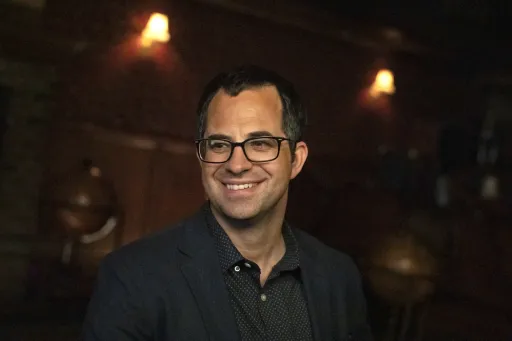
 Jay Van Bavel
Psychology Professor and Director of the Center for Conflict & Cooperation at New York University | Author of "The Power Of Us" book & newsletter @powerofus
“Something like 97% of political posts on social media are driven by 10% of users… We have a paper we're about to submit where we find on every single topic we study, the people who post the most are the most extreme. So you're just getting the extremes and they're posting non-stop. And people who have a nuanced view or are mixed feelings or ambivalent or just neutral or unsure don't post. And then it creates a false perception of the social norm.”
Behavioral Grooves Podcast · November 2026
Context
On why online discourse feels so toxic, Jay turns from platform incentives to who actually posts. The loudest posters are unrepresentative, which distorts what everyone else thinks the norm is.
Transcript
…the hell? Why are people so mean to strangers? And they don't even know the situation. She was actually separated. So like, who cares if she's like canodling with somebody, presumably at a concert. But her whole life was really shattered because of the way people piled on her in very vicious ways.
…amiable, you know, we can talk and have a, you know, a conversation. Online, I, like, I get berated and just screamed at in, you know, all caps or other pieces of that. Why does the what is it about social media from your perspective that like allows that to happen? Where did that come from?
…huge amounts of engagement and now is making good money. Like you can make a living doing that. And so this is what's driving this. And then now let me add on the factors of individuals. Who posts on social media? This is something I've started to study last few years in my lab. When you're talking about, let's say, politics, the people who join that conversation and post the most, it's like something like 97% of political posts on social media are driven by 10% of users. Okay. Now, that might not be that bad if those 10% of users are representative, right? Because we do national surveys with representative sample. We can figure out what the public thinks, but they're not representative. We have a paper under, we're about to submit under this where we find on every single topic we study, the people who post the most are the most extreme. So you're just getting…
Going back to the incivility piece on Oprah, is part of that then that social norms that are being transferred in online, are they being then realized in real person then as well? Is that part of what is fueling some of that?
So that is my current thinking, but we do not have good evidence of that piece of the puzzle yet. But we do know it is changing perceptions of norms online. We just don't know how much that is spilling over into how you treat somebody at a Starbucks or your doctor. But my guess is almost certainly…
I think it is. I am 100%. I bought the seat and I can lean that seat back. But that's that's me.
More from Behavioral Grooves Podcast