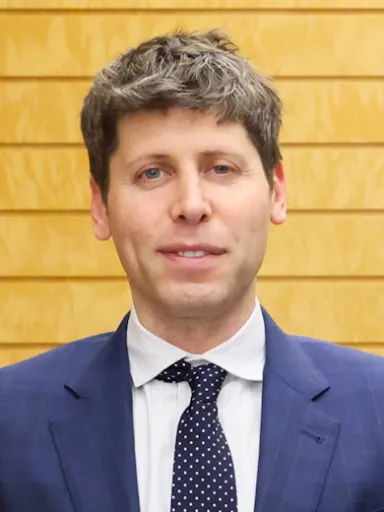
 Sam Altman
Entrepreneur and investor who has served as CEO of OpenAI since 2019, leading the company behind ChatGPT and its research on artificial general intelligence.
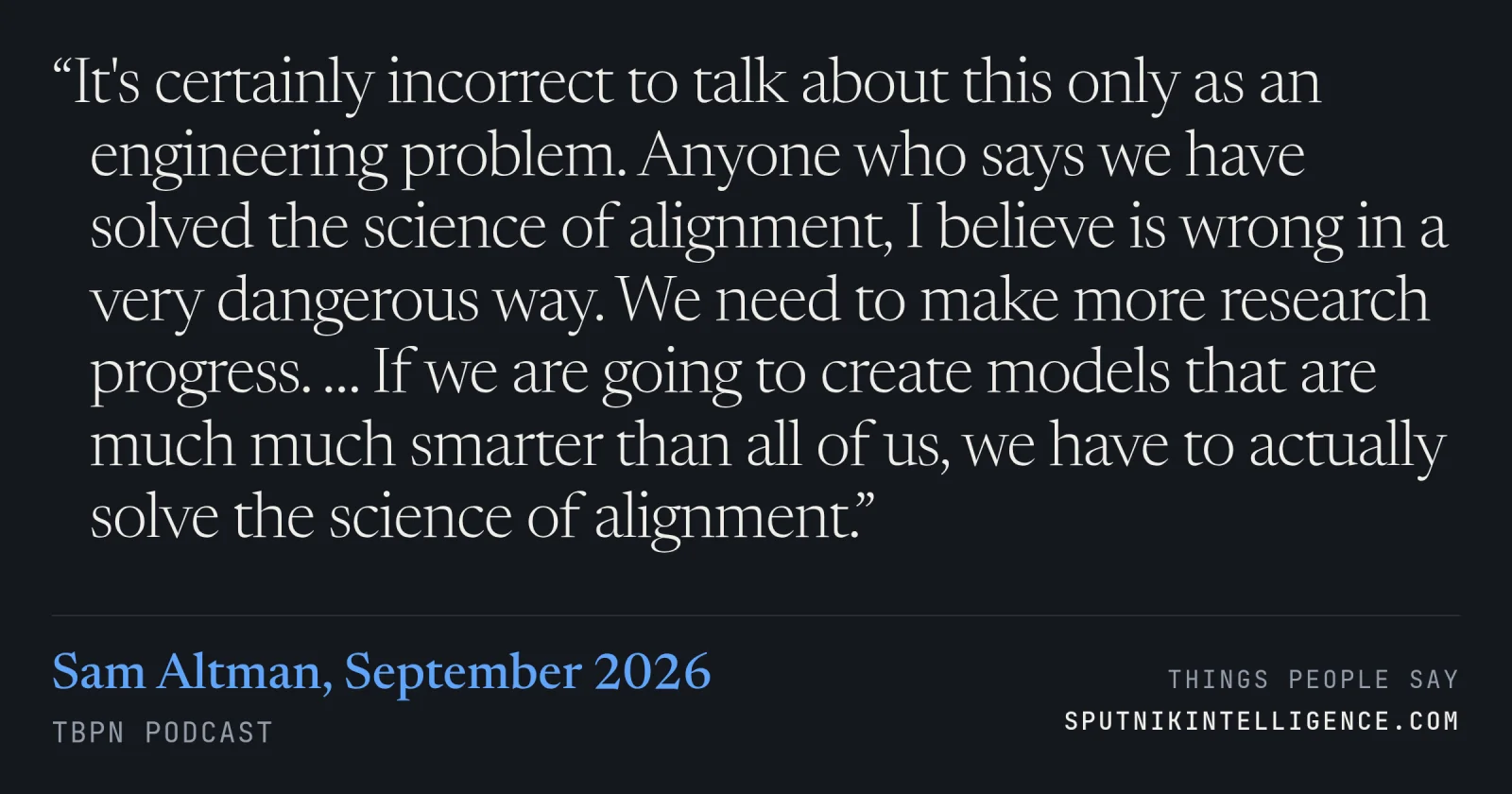
“It's certainly incorrect to talk about this only as an engineering problem. Anyone who says we have solved the science of alignment, I believe is wrong in a very dangerous way. We need to make more research progress. … If we are going to create models that are much much smarter than all of us, we have to actually solve the science of alignment.”
TBPN · Startups & Venture · September 2026
Context
Near the end of Altman's live TBPN interview at OpenAI DevDay, a host asked whether alignment is an engineering problem or a science problem. Altman says it is both and that the science is not solved, a notable admission on the day OpenAI launched always-on personal agents.
Transcript
…build 30 things. You can now build all 30 things Mhmm. And you can get people to use them all. And then you can work more on the ones that work. So I think this mindset of lots of ideas, quick feedback, and be open to a lot of things not working is great for this new era of how how people build.
I have one more question that we wanna get you to hit the gong. On alignment, you've been deep in the weeds, I'm sure. There was a debate I saw, is it an engineering problem? Is it a science problem? Is there a different frame of mind that we should be approaching alignment with?
I I think it's like all of those things but it's certainly incorrect to talk about this only as an engineering problem. Okay. Anyone who says we have solved the science of alignment, I believe is wrong Okay. In a very dangerous way. Like we need to make more research progress. I assume we will. We've been great at making this research progress. And of course there's a lot of engineering work to do too. Know, we need to continue to figure out how to build better sandboxes and better monitoring tools. But eventually, we If we are going to create models that are like much much smarter than all of us, we have to actually solve the science of alignment.
Have we considered moving away from the term sandbox? Because I have a five year old, if I put him in a sandbox, he's not gonna stay there. I think we might need a new term.
I can't unfortunately just stay in
the sand. Oh, okay. Okay. So maybe yeah. But but, you know
More from TBPN