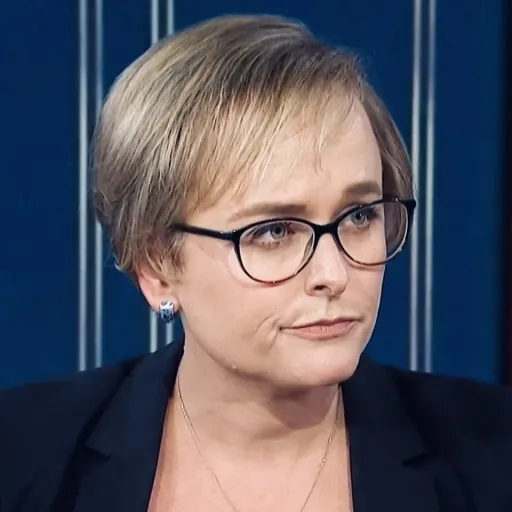
 Julia Curlee
Lawfare Public Service Fellow, former CIA officer and NSC Director, current citizen.
“Most of the successful ones are actually not that expensive. And if they are expensive, then you're probably using the wrong tool. You probably should be doing something that is overt, that uses the mass of the other institutions of the United States, like the military, to achieve an objective.”
The Lawfare Podcast · Policy · November 2026
Context
Part of the same answer on lessons for US intelligence: she says the Russian operation worked partly because it was narrow, concrete and cheap, and draws a general rule about when covert action is the right tool.
Transcript
and there were plenty of other counteractions that Russia took in the decade afterwards that have done severe damage to the Russian economy and its people, most principally the invasion of Ukraine.
…that also does covert actions. And what should we learn from this? Should we be actively measuring in lots of countries' internal affairs? Should we be running covert campaigns in Greenland? Should we be, you know, what should we be taking from this as a lesson of success for our own covert action?
…in the domestic political affairs of a democratic nation. At least traditionally, that's true. I would say that learning from this, that covert action in this case succeeded partly because it was narrow, had very specific concrete goals. Two out of three were measurable on the night of the election. It was relatively cheap. Some covert action succeeds. That is a bit more expensive, but most of the successful ones are actually not that expensive. And if they are expensive, then you're probably using the wrong tool. You probably should be doing something that is overt, that uses the mass of the other institutions of the United States, like the military, to achieve an objective. It was part of a broader policy. So the covert effort was consistent with the overt effort of the Russians to, whether it's diminishing U.S. power, getting the U.S. to turn within, dividing us from our allies, it was all consistent with that. It wasn't trying to achieve some underhanded miracle at odds with the public statement of the Russians. And that probably most importantly, it exploited…
And what about in a defensive sense? You end the piece with two lessons for us as a recipient nation of this Russia’s Covert Action. I want to read them and then have you flesh out both a little bit. 10 years on Russia's 2016 operation offers two lessons. First, a foreign intervention pays off most…
You know, like a lot of things as we think about how to Trump proof the presidency, I will start off with the caveat that there may be no proofing the presidency against the president, but there are probably things we could do to increase friction so that, as I discussed in this, the winner's veto…
We are going to leave it there, Julia Curlee. The piece is the unhidden hand. And it was published in Lawfaire several days ago on October 22nd. How Russia's greatest returns from the 2000, from 2016 came from the president it helped elect. Thank you for joining us today.
More from The Lawfare Podcast