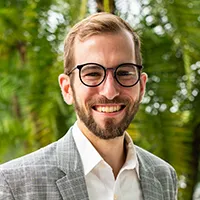
 Kevin Frazier
Director of the AI Innovation and Law Program at the University of Texas School of Law, Senior Editor at Lawfare and senior fellow at the Abundance Institute, w...
“The only people who can enforce it are most interested in one prong of the balancing.”
The Lawfare Podcast · Policy · November 2026
Context
Tallarita had explained that only shareholders above a set ownership threshold can sue to enforce a public benefit corporation's balancing duty. Frazier points out the design flaw: the people with standing are the ones who mainly want profit, so almost no one is positioned to enforce the social-mission side of Anthropic's charter.
Transcript
…The other layer that I want to get to next is that the board itself is comprised in a very interesting fashion. So, we know we're going to have seven board members. Can you walk through how each of them is going to be appointed, and then we'll get into the weeds of the long-term benefit trust.
…were about shareholders complaining that the boards care too little about them and about profit making. So, weren't really cases about enforcing the social, the social purpose, which is not surprising. That's what shareholders are there for. They're trying to make some money with this investment.
But that's just such a great thing to point out, though, about this design of PBCs to begin with. The only people who can enforce it are most interested in one prong of the balancing.
Exactly, exactly. That's a big weakness, right? But I mean, it's understanding from a governance standpoint. It would be a total mess if anyone could have standing to sue the company because they're not doing the things that are good for humanity. It would be completely unmanageable. But this is…
So we know that there are certainly going to be shortcomings with a sort of corporate governance alone as the mechanism to avoid some of those worst case outcomes. And as you noted previously, boards traditionally have been thought of as having a hyper-focus on the financial interests. We mitigate…
So this is the most interesting and creative part of Anthropic's governance structure. But let me immediately say something that will, it's kind of surprising. And the long benefit trust is not 100% focused on safety. Even the trust has a triple mission, as it were. So it has to balance profit…
More from The Lawfare Podcast