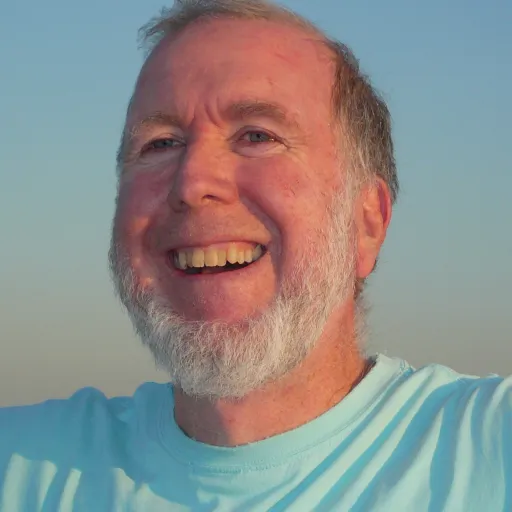
 Kevin Kelly
Senior Maverick, Wired, a magazine I co-founded in 1993.
“I think the paths for AI where it goes wrong are many and frequent and easy. I think the path where everything goes right is narrower and harder to navigate, and that we can't do it accidentally, inadvertently. We actually have to imagine it first and imagine the details and then believe that we can make them.”
Freakonomics Radio · Ideas & Essays · October 2026
Context
Dubner asked why Kelly focuses on the most positive version of AI's future. This is his reasoning: if the culture only tells stories of AI going wrong, the narrow good path becomes harder to find.
Transcript
…problems that we've ever had. So, it's not that there's going to be fewer problems or no problems with AI. There's going to be a lot of problems, but we're going to solve them with better technology. I am focusing on the most positive, best-case scenario version of things for a particular reason.
What is that reason?
I think the paths for AI where it goes wrong are many and frequent and easy. I think the path where everything goes right is narrower and harder to navigate, and that we can't do it accidentally, inadvertently. We actually have to imagine it first and imagine the details and then believe that we can make them. I mean, if every single Hollywood movie about AI is like, this is bad news, if you have an alternative to that, then that makes it much more likely to be able to reach that than if the only story you have of AI is that they're going to kill you.
As we heard last week, Kelly envisions a future, a very near future, where we all have access to an exo-self, an always-on, AI-powered companion that can advise, protect, inspire, and guide us to a better state of being. And yes, it is a fairly trippy idea.
I think that there are going to be thousands of different AI species, different varieties of minds. I think the possibility of minds is vast, and we will engineer these to do different things. The intelligence itself is probably not an element. It's probably what we think of as now as a compound of…
When it comes to human creativity, Kelly thinks that an exo-self could push us to produce more and better work, including how we conceive of ourselves.
More from Freakonomics Radio