 Scott Kupor
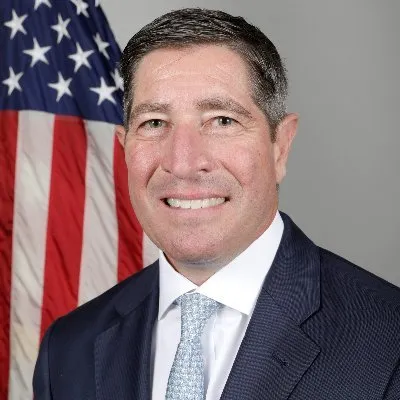
Director of the U.S. Office of Personnel Management since July 2025, working on federal workforce size, merit-based hiring and the U.S. Tech Force.
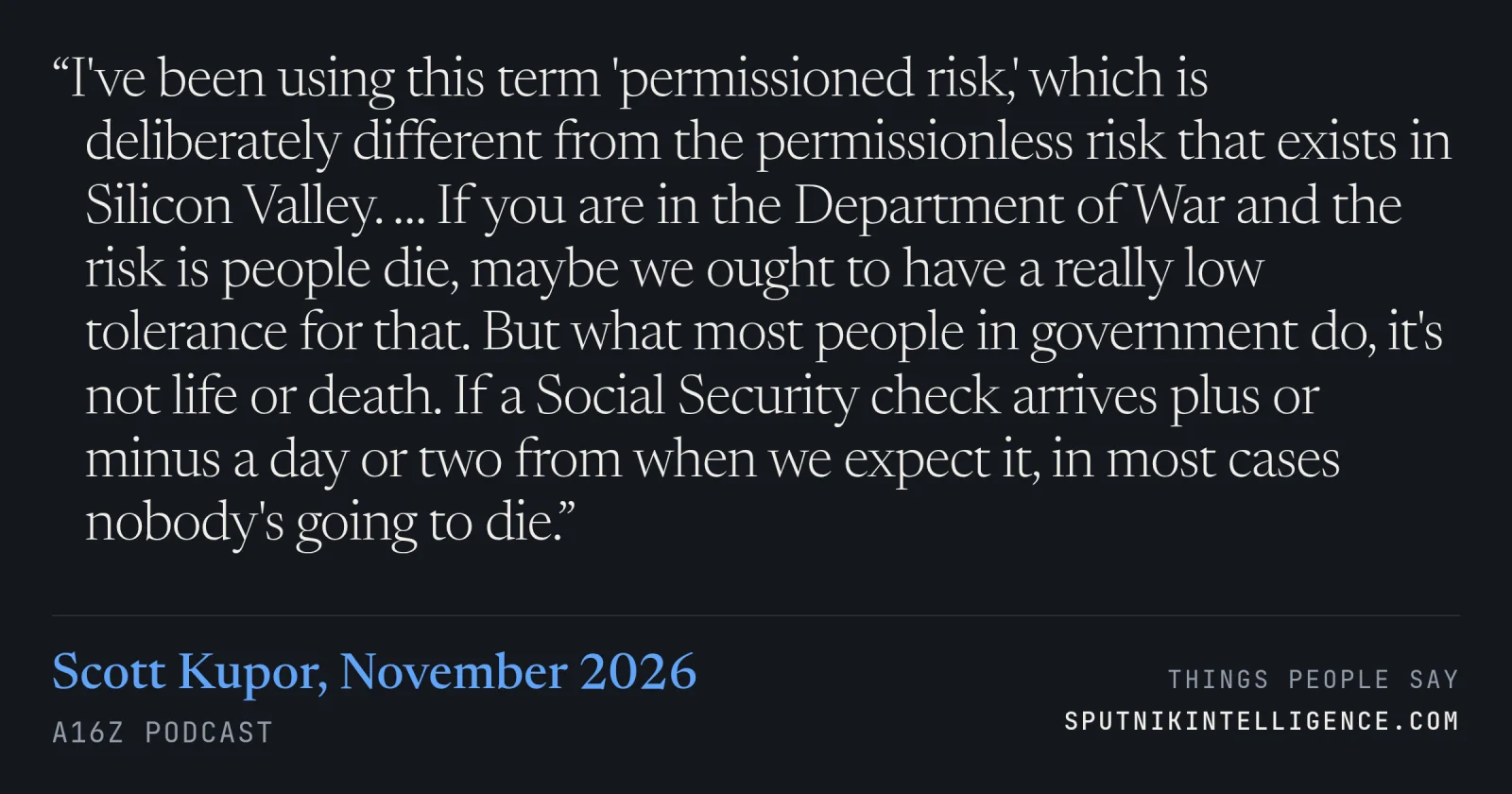
“I've been using this term 'permissioned risk,' which is deliberately different from the permissionless risk that exists in Silicon Valley. … If you are in the Department of War and the risk is people die, maybe we ought to have a really low tolerance for that. But what most people in government do, it's not life or death. If a Social Security check arrives plus or minus a day or two from when we expect it, in most cases nobody's going to die.”
a16z Podcast · Startups & Venture · November 2026
Context
Kupor describes how he wants to loosen the zero-risk culture inside federal agencies, arguing risk tolerance should scale with the stakes of the job rather than being near zero everywhere.
Transcript
…don't want you to get hauled in front of Congress for doing something that they don't want you to do. We don't want you to get a report from the GAO, which is basically like this compliance organization. We don't want the inspector general, you know, doing stuff. And I was like, okay, like, okay,
so then let me just send a room together.
That's easy. Yeah. Like it's pretty easy how to solve that, right? Which is okay. Like we will just do nothing, right? It's exactly right. That's what I said. I was like, that's not your job. Like your job is to help us figure out like, what can we do that's good? And yes, if we have a good reason for doing something and we screw it up, like I'm fine getting hauled in front of some congressional committee and explaining that to them. Obviously, if we're, if we're, our process was crappy, that's, we got to fix that. But what it means is basically it does not allow for any innovation, right? So look, I come from, as you know, we come from this crazy world in venture capital where we take like obscene amounts of risk, which is fine because you've got like upside that potentially is uncapped, right? And like, that's a good thing to happen. And that can cover a lot of mistakes. We don't have that in government, but instead, what they've had is basically the answer is like, take zero risk, but that also means therefore like no consideration of upside potential for anything. And so, part of the incentive structure that I think we have to put in place and we're trying to put in place is I've been using this term permissioned risk…
possibility for any kind of innovation, like what kind of talent are you going to attract?
Yeah. So here's the other side of this, right? Which is then you have a performance management system that's also screwed up. So I'll give you a story. I think you and I may have talked this a long time ago when we first met. Everybody gets ranked generally one through five at the end of the year…
organization of 7,000 people. Yeah, it's
More from a16z Podcast