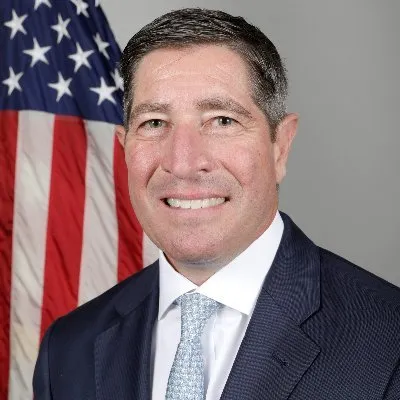
Scott Kupor

Things Scott Says on Podcasts

Director of the U.S. Office of Personnel Management since July 2025, working on federal workforce size, merit-based hiring and the U.S. Tech Force. Before government he was the first employee at Andreessen Horowitz and went on to be a partner and managing partner there. He chaired the National Venture Capital Association from 2017 to 2018 and wrote the Wall Street Journal bestseller Secrets of Sand Hill Road: Venture Capital and How to Get It. Appears as a guest on TBPN, Odd Lots, Joe Lonsdale's American Optimist, Venture Unlocked, Capital Allocators and Masters in Business, and is credited on an a16z Podcast episode on crypto.

Where to Find Them

Scott Kupor hosts a16z Podcast . They have also been a guest on TBPN (3 times) , HBR IdeaCast , Joe Lonsdale , Capital Allocators – Inside the Institutional Investment Industry , Masters in Business , Odd Lots , Ruthless Podcast , Slate Money , David Senra , The Twenty Minute VC (20VC): Venture Capital | Startup Funding | The Pitch , Venture Unlocked , Decoder with Nilay Patel and FT Tech Tonic .

Recently: “Scott Kupor on Building a16z and Rebuilding the Federal Workforce” on a16z Podcast (November 2026); “a16z's First Employee on the History of a16z, Venture Capital & Fixing the Government | Scott Kupor” on David Senra (November 2026); “Ep 165: OPM Director Scott Kupor on Shrinking Government, Bringing Merit Back, and Why America’s Best Minds Should Join the U.S. Tech Force” on Joe Lonsdale (October 2026); “Talarico’s Shocking Behavior Makes Voters Suspicious” on Ruthless Podcast (September 2026); “New Apple Products, Anthropic's Strategy, Why AI Costs Don’t Hurt Apple | Dean Ball, Scott Kupor & Jared Isaacman, Adam Bry, Matteo Franceschetti, Dillon Rolnick” on TBPN (March 2026); “Scott Kupor's New Plan to Bring Tech Workers Into the Federal Government” on Odd Lots (December 2025).

What They Said

“My very first day on the job, they said, 'We made an investment in this company, can you call capital from our LPs?' I didn't even have an email yet, so I used my personal Gmail. I send this notice to like 50 LPs saying, 'Wire me a million dollars.' I immediately get an email back from one of them: 'Who are you? Why are you sending me this email?' He calls Mark and Ben and says somebody's impersonating you guys.” — Scott Kupor, a16z Podcast

Asked what it was like being the first employee at a16z, Kupor tells this story from his first day, which is the reason the firm got its own email domain.

a16z Podcast · 2026-11-09 Permalink → Listen →
a16z Podcast Around 01:13 into the episode
Speaker 1

…and giving people more room to take what he calls permissioned risk. Because for Scott, whether you're building a venture firm or a forming government, the underlying question is surprisingly similar. Do you have the right people, the right objectives, and the right incentives to get them there?

David Senra

Tell me what it's like starting A16Z with Ben and Mark.

Scott Kupor

It was interesting. So let me give you the backstory if I can. So we had sold our last company to Hewlett-Packard, right? So we sold in 2007 and a bunch of us had basically indentured servitude to HP for, you know, 12 to 18 months. And then the summer of 08, and remind you, right, you know your history, right? So in March of 08, basically Bear Stearns disappears, right? So it's summer of 08, and Mark and Ben are like, yeah, we're going to do this. They've been doing angel investing for a long time with their own money. And they said, look, it'd be a lot more fun if we institutionalized this and went out and raised money. We were literally having this conversation summer of 08. And then September of 08, of course, Lehman goes bankrupt like overnight. And so the world seems to be coming to an end. So I go home one day to my wife. I'm like, good news. I'm going to quit my job at HP, which is probably the most stable job you have, and join these two guys. And we were actually living in North Carolina at the time because we had acquired our business out there. And Ben and Mark had asked me to go move out to run it. So I was already, I was, you know, not in California even anymore. So it took me a…

Speaker 4

Was Michael Obitz around the A16Z at this time?

Scott Kupor

He was, yeah. So, Michael had been on our board actually at Loud Cloud and Opsware. So, that's how obviously Mark and Ben knew him, but that's also how I got to know him. And yes, he was very, very influential, as you probably know. And I'm sure Mark told a story just about like the founding of the…

Speaker 4

Was this around Michael Ovis' idea of this phalanx, where it's like, if you, before that, it's like you were his, you might like his, he's your agent, but really it's like, you know, you have all of

Speaker names come from our own diarization. The position is estimated from where the line sits in the episode.
“I've been using this term 'permissioned risk,' which is deliberately different from the permissionless risk that exists in Silicon Valley. … If you are in the Department of War and the risk is people die, maybe we ought to have a really low tolerance for that. But what most people in government do, it's not life or death. If a Social Security check arrives plus or minus a day or two from when we expect it, in most cases nobody's going to die.” — Scott Kupor, a16z Podcast

Kupor describes how he wants to loosen the zero-risk culture inside federal agencies, arguing risk tolerance should scale with the stakes of the job rather than being near zero everywhere.

a16z Podcast · 2026-11-09 Permalink → Listen →
a16z Podcast Around 26:34 into the episode
Scott Kupor

…don't want you to get hauled in front of Congress for doing something that they don't want you to do. We don't want you to get a report from the GAO, which is basically like this compliance organization. We don't want the inspector general, you know, doing stuff. And I was like, okay, like, okay,

David Senra

so then let me just send a room together.

Scott Kupor

That's easy. Yeah. Like it's pretty easy how to solve that, right? Which is okay. Like we will just do nothing, right? It's exactly right. That's what I said. I was like, that's not your job. Like your job is to help us figure out like, what can we do that's good? And yes, if we have a good reason for doing something and we screw it up, like I'm fine getting hauled in front of some congressional committee and explaining that to them. Obviously, if we're, if we're, our process was crappy, that's, we got to fix that. But what it means is basically it does not allow for any innovation, right? So look, I come from, as you know, we come from this crazy world in venture capital where we take like obscene amounts of risk, which is fine because you've got like upside that potentially is uncapped, right? And like, that's a good thing to happen. And that can cover a lot of mistakes. We don't have that in government, but instead, what they've had is basically the answer is like, take zero risk, but that also means therefore like no consideration of upside potential for anything. And so, part of the incentive structure that I think we have to put in place and we're trying to put in place is I've been using this term permissioned risk…

David Senra

possibility for any kind of innovation, like what kind of talent are you going to attract?

Scott Kupor

Yeah. So here's the other side of this, right? Which is then you have a performance management system that's also screwed up. So I'll give you a story. I think you and I may have talked this a long time ago when we first met. Everybody gets ranked generally one through five at the end of the year…

David Senra

organization of 7,000 people. Yeah, it's

Speaker names come from our own diarization. The position is estimated from where the line sits in the episode.
“Historically in government, 99.7% of people are a three or above, meaning literally 0.3% fall below expectations. Now, in a population of 2 million people, is that even mathematically possible? It's not. … How do I attract and retain great people when I'm sitting here busting my ass and you're dialing it in? Everyone knows you suck, but nobody actually wants to do anything about it.” — Scott Kupor, a16z Podcast

Kupor, who now runs the federal Office of Personnel Management, explains the one-to-five performance rating system used across government. He argues near-universal good ratings make accountability impossible and push out high performers.

a16z Podcast · 2026-11-09 Permalink → Listen →
a16z Podcast Around 27:47 into the episode
Scott Kupor

…that. So that's part of number one. Like that's part of the reason why the system screwed up is like there is zero, zero opportunity for innovation. As a result, therefore you have slow and plotting and not great customer service from a lot of these organizations. Well, not that. If there's zero

David Senra

possibility for any kind of innovation, like what kind of talent are you going to attract?

Scott Kupor

…their employee rating. Some organizations have a four-point rating, but say one through five. One is the worst. Like you definitely like should not be here. Five is like you're knocking the cover off the ball. And three means, hey, like, you know what? Like you're good. You're doing what we asked you to do. That's all fine. And every organization, quite frankly, needs a lot of people like that. Historically in government, 99.7% of people are a three or above, meaning literally 0.3% fall below expectations. Now, in a population of 2 million people, is that even mathematically possible? It's not. So you have one problem, which is we don't do anything on low-end accountability in the government. I'll tell you about how we're going to change this in a minute. But so that's a serious problem to your point, which is, look, how do I attract and retain great people when I'm sitting here busting my ass and you're like dialing it in? Everyone knows you suck, but like nobody actually wants to do…

David Senra

organization of 7,000 people. Yeah, it's

Scott Kupor

not, again, it's just not possible, right? What it means is like we've gained the system. And as a result, again, if I'm a high performer, like, you know, I want to be a high performer and there ought to be smaller numbers of people who are high performers. And by the way, I ought to just…

David Senra

essentially stuck in purgatory for six months.

Speaker names come from our own diarization. The position is estimated from where the line sits in the episode.

Collections They Appear In