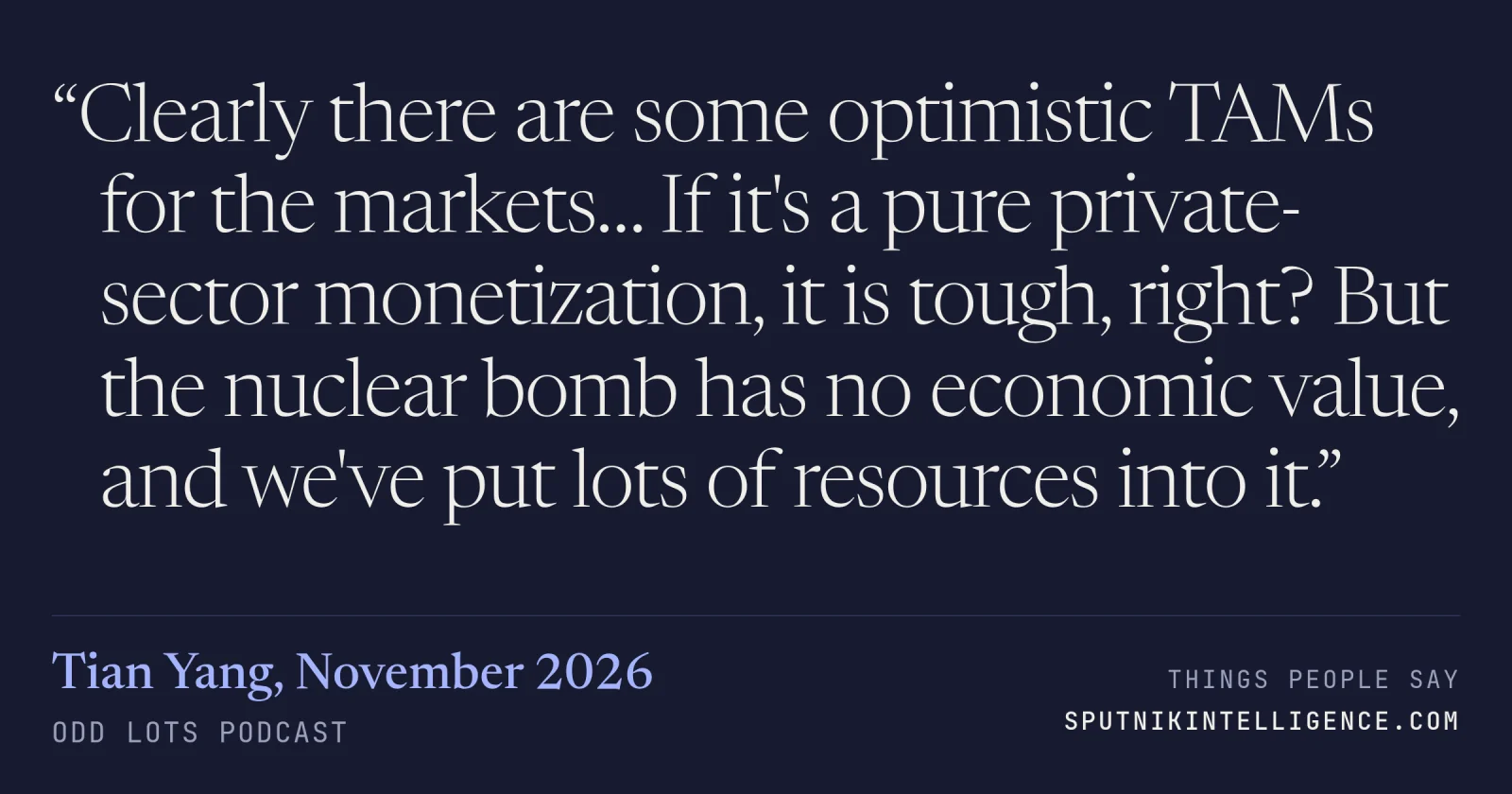
“Clearly there are some optimistic TAMs for the markets… If it's a pure private-sector monetization, it is tough, right? But the nuclear bomb has no economic value, and we've put lots of resources into it.”
Odd Lots · Money & Markets · November 2026
Context
Weisenthal asked whether Yang sees weakness in the commercial case for AI. Yang separates the commercial case from the national-security case. He compares AI to the bomb, which was funded for security, not profit.
Transcript
…in the non-AI stuff, right? Like, you know, the fast cycle race growth slows down. But AI has been the secular thing. What connects them now is this financing need. And the financing need is sort of a function of the macro interest rates and where we are. And that's what's connecting them now.
…this company. People are going to want to pay for it. That companies will like, oh, I'm getting value from my AI spending. Maybe consumers were like, maybe pay for like an assistant bot. Like some of these theses that people have, like, do you not see at this point any weaknesses in these stories?
Oh, yeah. I think clearly there's some optimistic TAMs for the markets. But I would say, again, if you put a sovereign. Lands on, there's a lot of assumptions about which of the markets and where things are going to leak, right? So, let's say we move to a world where governments have to get involved because we're strong to finance. There's going to be a lot of conditions attached to that government financing. The government might mandate everything you buy comes from the U.S. locally. So, then you inject a lot of similarities into the system. It's all kept here. So, asset prices here might be okay. But if you're a foreign supplier, you have other things that goes away, right? I think that's more likely the way we're going. That sure, if it's a pure private sector, you know, kind of monetization, it is tough, right? But as we said, if you're trying to, the nuclear bomb has no economic value, but we've put lots of resources into it. So, you have a nuclear bomb today, plus the steel use…
Yeah.
I would say that's an open question. The evidence so far is still yes.
Yeah.
More from Odd Lots