 Justin Wolfers
Professor of economics and public policy at the University of Michigan, a non-resident senior fellow at the Brookings Institution, and author of a widely used i...
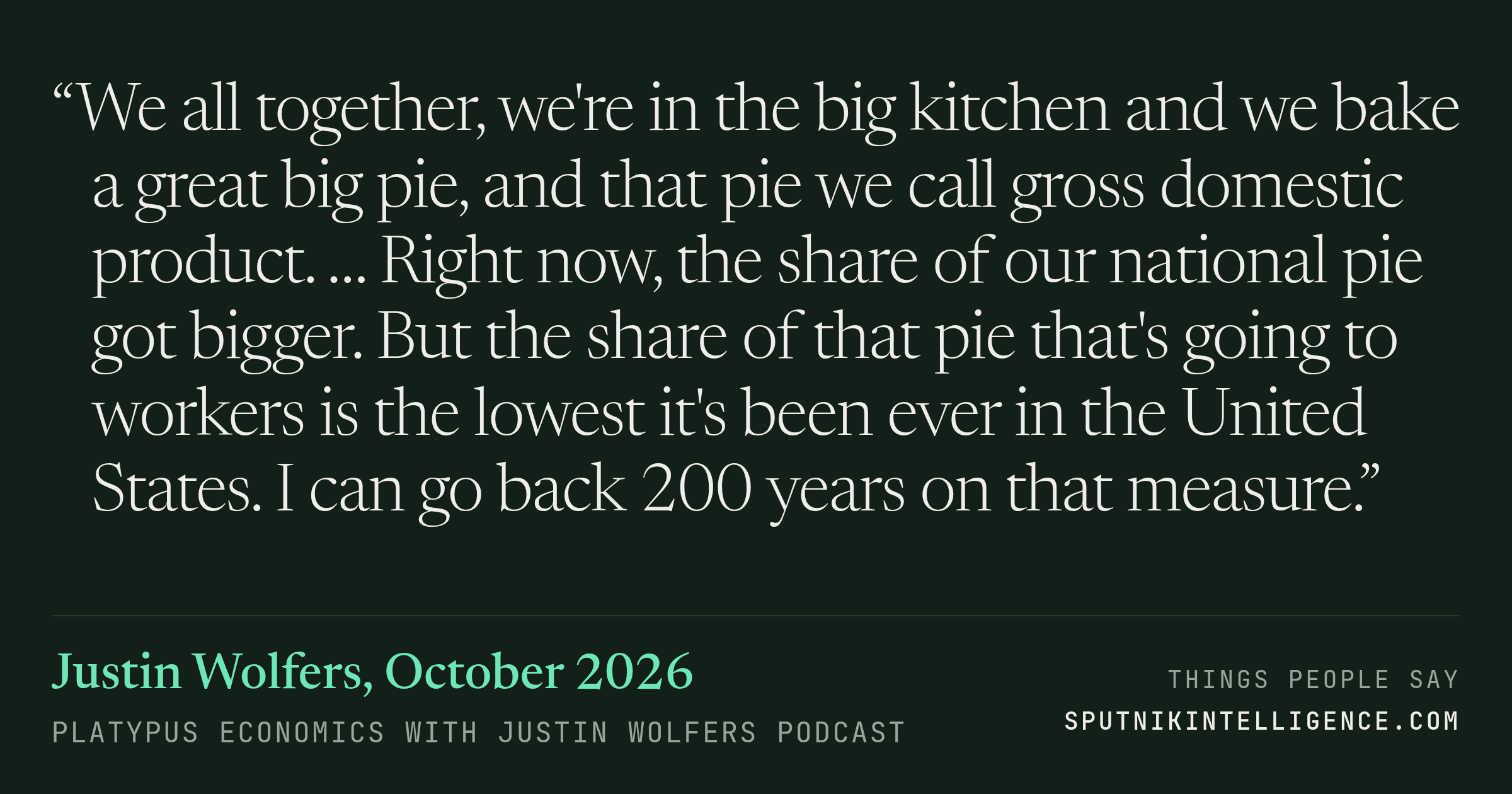
“We all together, we're in the big kitchen and we bake a great big pie, and that pie we call gross domestic product. … Right now, the share of our national pie got bigger. But the share of that pie that's going to workers is the lowest it's been ever in the United States. I can go back 200 years on that measure.”
Platypus Economics with Justin Wolfers · Money & Markets · October 2026
A caller with a master's in economics described being shut out of the job market and delivering for DoorDash to wealthy households in her town. Wolfers calls her story a microcosm of the US economy: owners are doing great while the workers' slice shrinks.
Transcript
…And then to make ends meet, I'm a DoorDash delivery driver. And you talked about how the policies right now are capitalist policies and trickle down. I have endless DoorDash deliveries. There are a lot of wealthy people in my area ordering food. However, I cannot enter the job market at this point.
Wow. Very interesting, Kira. Thank you very much for that, Justin. So many people have gotten into that world of DoorDash, but that is an interesting thought about how you're delivering to a bunch of rich people and you're getting this view of the economy that's a bit different.
Look, the story of Boulder is in some sense a beautiful microcosm for the story of the U.S. economy. Steve Leesman was talking about this earlier. This is an economy. One way to think about an economy is we all together, we're in the big kitchen and we bake a great big pie, and that pie we call gross domestic product. The bigger the pie, the better, you reckon. The thing is, we have to decide how to slice that pie. And a chunk of it goes to owners, capital, and a chunk goes to workers, labor. Right now, the share of our national, our national pie got bigger. But the share of that pie that's going to workers is the lowest it's been ever in the United States. I can go back 200 years on that measure. And so…
Justin, I have a question about that because I feel like even 10 years ago, they were like, the gig economy is done. Is that even still a viable
option for people? Should I learn Uber or should I get a car? You know, learn to Uber. It is viable. And it's a way that people can, look, before it's very interesting economically and different people are going to have different views about it. But it used to be you lose your job and you have to…
All right. Let's get to another caller. Oh, yeah, go ahead, Steve. Just real quick, the trouble with the Uber Eats and the DoorDash driver is there's no specialty involved because everybody has a GPS. That's what's happened why Uber is so successful is our phones where it used to be a taxi driver…
More from Platypus Economics with Justin Wolfers