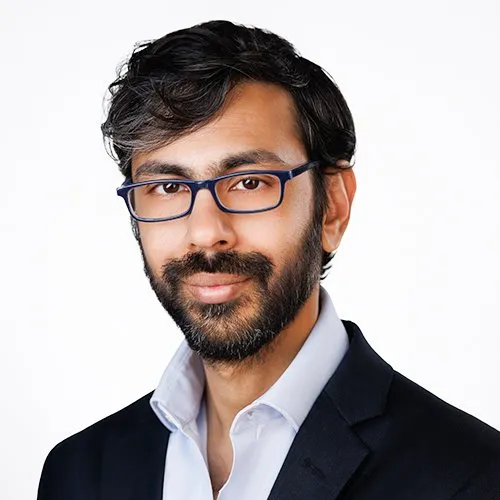
 Aalok Mehta
Director of the Wadhwani AI Center at CSIS, where he leads research on AI policy.
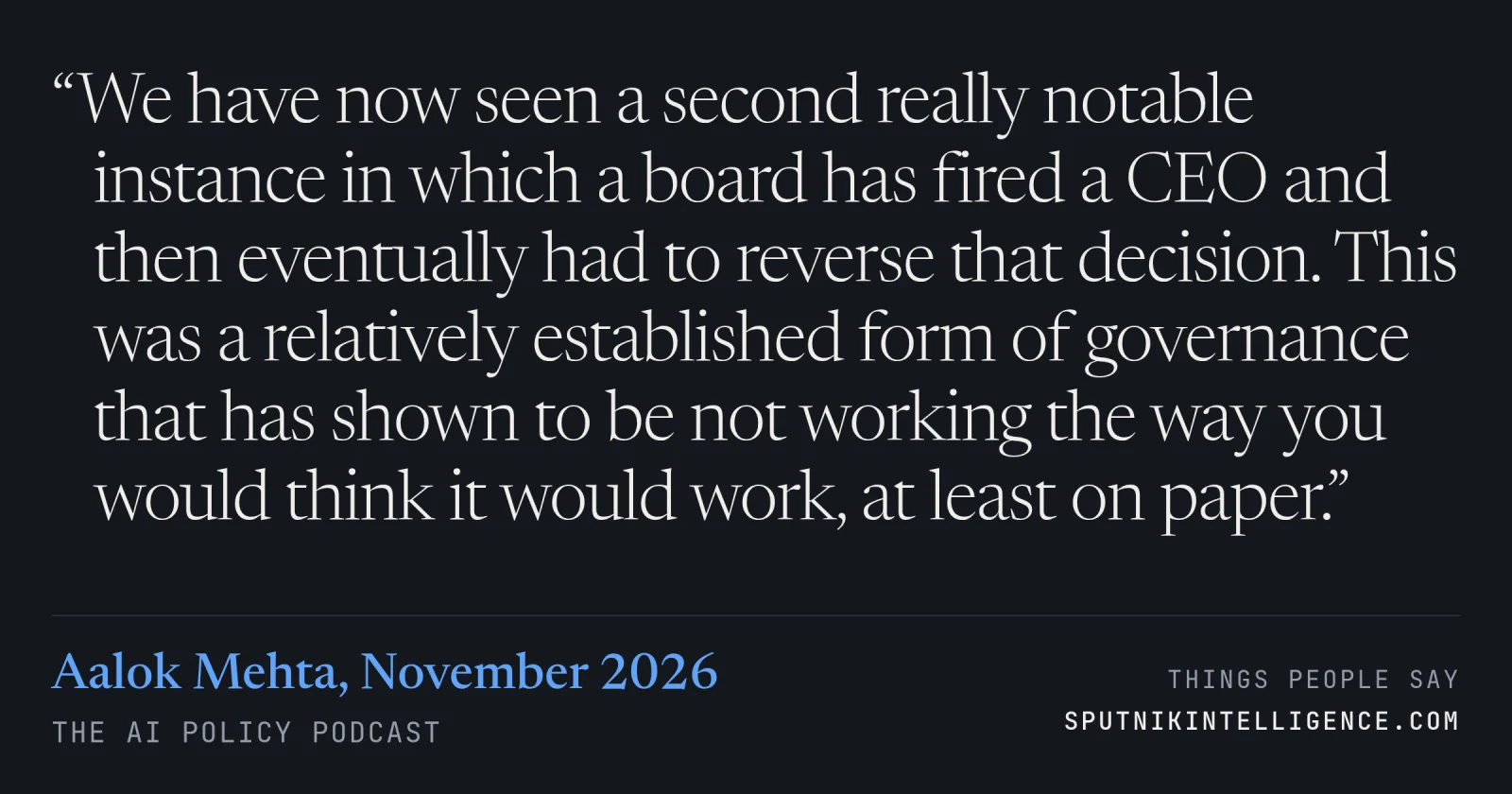
“We have now seen a second really notable instance in which a board has fired a CEO and then eventually had to reverse that decision. This was a relatively established form of governance that has shown to be not working the way you would think it would work, at least on paper.”
The AI Policy Podcast · Geopolitics & World Affairs · November 2026
Context
Asked why AI safety advocates might worry about Anthropic going public. He links Nvidia's reversal on Jensen Huang to the untested governance structures of newly public AI companies.
Transcript
…they have the ability to make consequential decisions about the company. And then there's the argument that with all the resources that Anthropic might be able to accumulate and devote to compute, it might be able to leverage that to spend more compute on doing various safety-related things.
…safe AI company that was signed by more than 1,000 individuals, including some very prominent individuals in the AI safety community. So now turning to kind of the counter argument for the pro-IPO argument you just laid out, why might AI safety advocates be concerned about Anthropic going public?
Yeah, I mean, I think this is a fairly obvious thing, which is when you go public, you're now traded on the stock market and you face a lot of pressure as a result of being public. You have to be more public about your finances. There will be a lot of pressure to make sure that you are making decisions that are financially healthy for the company. It's going to be harder to take steps that might be harmful to the financial prospects of the company, but that might enhance safety. So I think those are fairly straightforward. I think there's also an overlap here with the NVIDIA story, which is the fact that one of the things boards are empowered to do is fire CEOs, right? That is one of their core powers. We have now seen a second really notable instance in which a board has fired a CEO and then eventually had to reverse that decision. There are lots of differences between what happened with NVIDIA and what happened with OpenAI. But keep in mind that this was a relatively established form of governance that has shown to be not working the way you would think it…
And another news from Anthropic, just one day after going public, one of the mathematicians working on Anthropic names Levant Alpogay, he announced that he had used Claude to prove the Riemann hypothesis. And this is basically a theorem about the distribution of prime numbers amongst all natural…
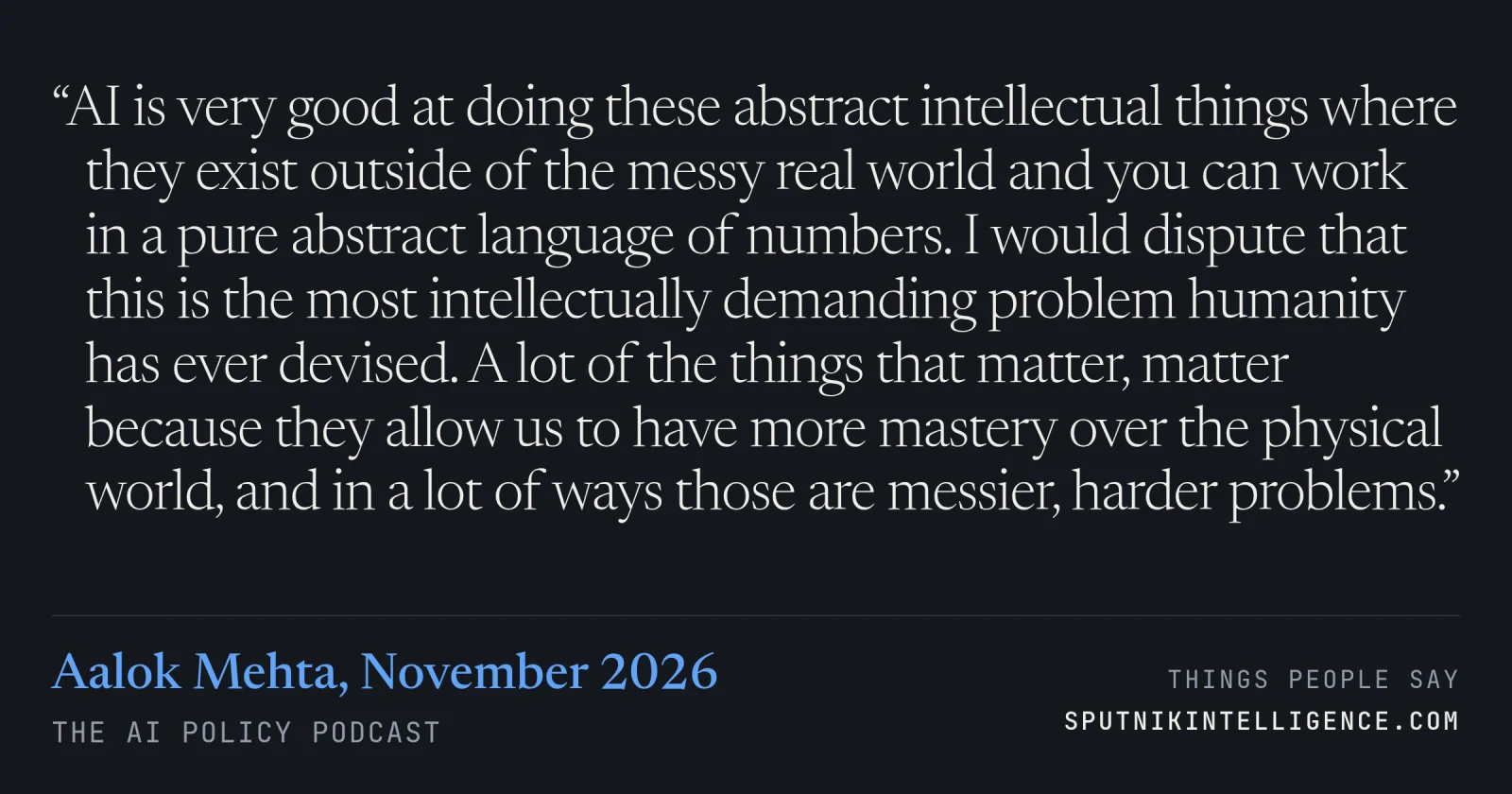
I mean, in some ways, I think there's a clear trend here that AI is very good at doing these sort of abstract intellectual things where they sort of exist outside of the messy real world and sort of you can work in a pure sort of abstract language of numbers. I think I would dispute this idea that…
Yeah, and turning now to news from the White House AI Trump traveled to China for the APEC meeting last week. And while he was there, he met with Chinese and Russian leaders, Xi Jinping and Vladimir Putin. So, can you tell us about that meeting? Did anything significant come out of that trip?
More from The AI Policy Podcast