 Carmine Gallo
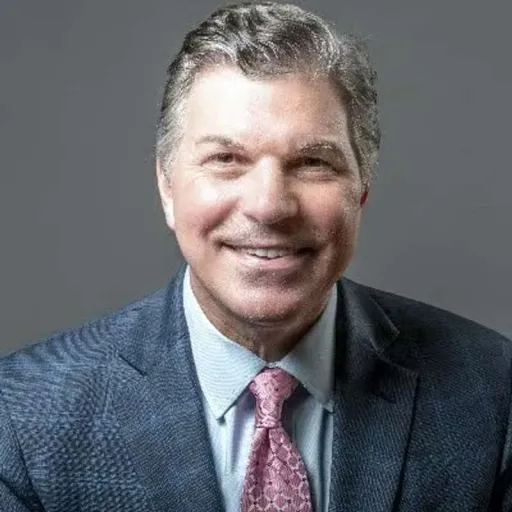
Writes and speaks on communication, storytelling, and persuasion, drawing on years studying how executives and public figures present ideas.
Carmine Gallo
Writes and speaks on communication, storytelling, and persuasion, drawing on years studying how executives and public figures present ideas.
“TikTok has not been around long enough to rewire our brains, but there are patterns.”
Think Fast Talk Smart: Communication Techniques · August 2026
Gallo spent two years studying communicators from Obama to MrBeast and was asked what a historic presidential address and a viral video have in common. He answers by rejecting the assumption behind the question — that the audience itself has been remade. The claim is narrower than the usual attention-span talk: the tools of communication changed, the 350,000-year-old brain did not.
Transcript
I love the fact that you brought up the brain doesn't pay attention to boring things. If that's all our listeners get from today's podcast, that will significantly improve their communication skills. Because the brain, when it doesn't have to pay attention to something because it deems it not a threat or not essential for survival, it'll move on to something else. Very happy to do so, and it'll conserve energy. So the challenge that we all have as communicators is how to, like you said, get through that filter, how to grab the brain's attention. And we do that by raising the signal through the noise. And there's a lot of noise out there today. The best way for a communicator to get their ideas across is to strengthen the signal, and that will cut through the noise, cut through the filter, capture the brain's attention. And what I've been taught by neuroscientists and many people who I've interviewed is that there are two primary ways of getting through those filters. Right now, especially in the age of AI, we do have something unique that AI does not have: emotion. Joy and fear are two of the most powerful emotions. And that's why social media prioritizes threats. If you don't do this now, you'll be in trouble. Those go viral because it ignites the threat response. Or on the other hand, on business presentations, business communication: if you do this, if you take these three steps, you can thrive in the age of AI. So that gives me something to hope for. But as long as things connect to an emotion, that is the principal way of cutting through that noise, getting through that filter. The other way is to make sure that whatever you say applies to the audience. Because the other question that the brain is asking itself is: why should I care about this person? Why should I care about the content? So, for example, in this podcast, you should care because what Matt and I are going to discuss will help you build the career that you dreamed of and thrive in the age of AI. So listen up because we're going to give you a lot of good tips.
Wow, what a great hook. So it's about relevance and salience, and it's about emotion. And that's what helps the brain focus and gets people engaged. And I really appreciate that. And many of us don't start from that place. In Viral Voices, your new audiobook, you explore a multitude of communicators. The list is large and they're very different from Barack Obama to Mr. Beast. Is there a common denominator between a historic presidential address, let's say, and a highly engaged viral YouTube video? And if there is, what is it and why should we care about it?
The one big lesson that I learned from two years of doing the research on viral voices is something that I think everybody needs to understand. And that is that the tools of communication have changed. The human brain has not. So now you're talking about the human brain, which is a 350,000 year construction project. TikTok has not been around long enough to rewire our brains, but there are patterns. If you look at patterns, they're very similar, which was the cool thing about the people I interviewed. You mentioned Barack Obama and Mr. Beast. Okay, what are the similarities? Both are storytellers, different types of stories, different audiences, different platforms, but they are both skilled at weaving together a narrative that makes you want to be a part of the story. I interviewed Barack Obama's speechwriter. His name is Terry Zuplat, who also now teaches at the university level. And he told me that a good speech has things like structure, a melody, like a song. I said, like a song. What do you mean by that? He said, let's take a look at some speeches. We broke down some speeches. And that's the cool part about having an audio original because then you can cut to the speeches. So Barack Obama, yes, we can. Those three words. But the way they wrote it at the end of a sentence provided a melody to it. So what the speechwriter was trying to show me is that everything starts with good writing, but writing is part science, part art. And you have to think about what's the structure. Mr. Beast has a three-act structure, much like a good Hollywood film. He understands that here's the status quo. Here's the problem we're going to solve. Here's the conflict that's going to arise if we don't solve this problem. But together, we're going to solve the problem. So it's very much structural. So you can learn something from great communicators. That's the point. You can learn something about the written word and delivery and melody and construction. You can also learn how to grab people's attention quickly and keep their attention. I think all great communicators in different platforms have something to teach us. But above all, there's patterns.
The fact that we are communicating through different tools, different techniques, we're still communicating with the same old brain we've had. And so those lessons learned in the past apply today. And I appreciate you delineating many of them. And I love this idea of communication having a musicality, a melody to it. And you see that in many of the most admired communicators we have. A lot of your new work is around persuasion influence. As you look back, not just in the work you did for Viral Voices, but in your esteemed career, can you identify two or three persuasion techniques, tools, or tactics that you think everyone should have in their influence toolkit?
The hook, the analogy, the context. Hook is important, especially now more than ever, because of social media. So it is important to, what they say, stop the scroll. If you're doing a podcast, if you're doing any type of social media, you've got to stop people from just scrolling and moving on blindly. How do you create a hook that grabs their attention? Again, great communicators do this all the time. Let's go back to 1998. Sergey Brin and Larry Page were here as Stanford graduate students. They came up with a new search engine called Google, and they crafted a one-sentence pitch. And the pitch went like this. Google organizes the world's information and makes it accessible. They used that pitch when they went to meet with Michael Moritz of Sequoia Capital, one of the big venture capitalists in Silicon Valley. I interviewed Michael Moritz years ago, and he said he still remembers that line because it grabbed his attention. Then the follow-up was, oh, that's interesting. Can I see a demo? Does it work? Then we can talk about finances. But the hook, he said, he didn't call it a hook. He said that one line meant everything. And now if you go on social media, go on TikTok and all these content creators are trying to teach you how to grab people's attention in the first place. three seconds. Get to the point, get to it quickly, make it relevant, tell people why they should care, and they'll start leaning in. You asked for top three persuasion techniques. Okay, so think about the hook, analogy. Analogy is something I'm really focused on these days because great communicators tend to use more analogy than average communicators. And analogies comparing two things to show their similarities. Usually used to take something that's abstract and make it familiar. Warren Buffett is the king of analogies and metaphors. So every time you watch CNBC, you'll always find an analyst who says, I love this stock because this company has a moat around it. Well, I looked that up. This whole thing about the moat, it has barriers to entry, makes it hard for competitors to enter that space. This whole idea of a company or stock having a moat, that comes from a newsletter that Warren Buffett wrote about 40 years ago. So it stands the test of time because it's a shortcut. Start with a hook. Make sure you have analogies and comparisons. And something we've already mentioned, context. Make people care as soon as possible. Because from what I've learned from neuroscientists, the brain is asking itself the question, make me care. Why should I listen? Otherwise, the brain has a lot of other stuff to do. And it gets bored easily. Make them care right at the beginning. This new platform, this new software that we're going to talk about today is going to save us X amount of money, which means that we're going to have a better career here at the company and we can hire those 10 new staffers that can support us. Make it relevant. Tell people right up front, here is why you should listen to the rest of my presentation. And they will, but you have to hand it to them. Hand it to them on a platter.
Absolutely. So you've given us the hack, hook, analogy, and contents. H-A-C- And what I want everybody who's listening and watching to recognize is what Carmine did is as he went through that he gave you the information he said what it was the hook the analogy explained what it was and then gave a concrete example and that's another way to help the brain learn you give an idea and then you reinforce it and you did that expertly without calling attention to it i want to get into the details and the mechanics of some of the things that you've studied and you write and talk about you rely a lot on the three act structure and you talk about beats and i'd love for you to share with us how we can apply things like the three-act structure in beats to our everyday communication not a ted talk not when we're doing a big presentation when we're on a zoom a team a meet when we're having our normal interactions how can we leverage these tools to help us be better and more engaging in our communication