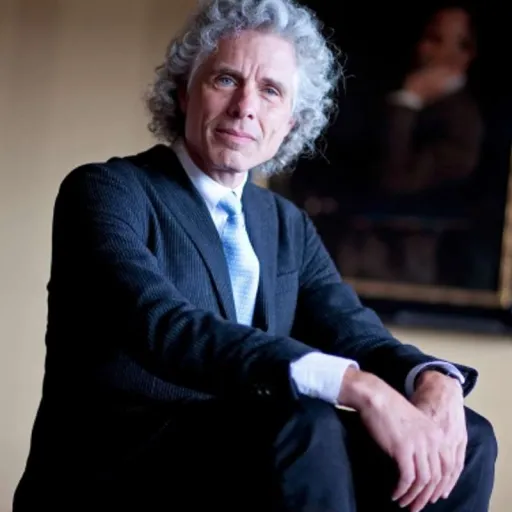
 Steven Pinker
Cognitive scientist and Johnstone Family Professor of Psychology at Harvard who writes on language, mind, human nature and human progress.
Steven Pinker
Cognitive scientist and Johnstone Family Professor of Psychology at Harvard who writes on language, mind, human nature and human progress.
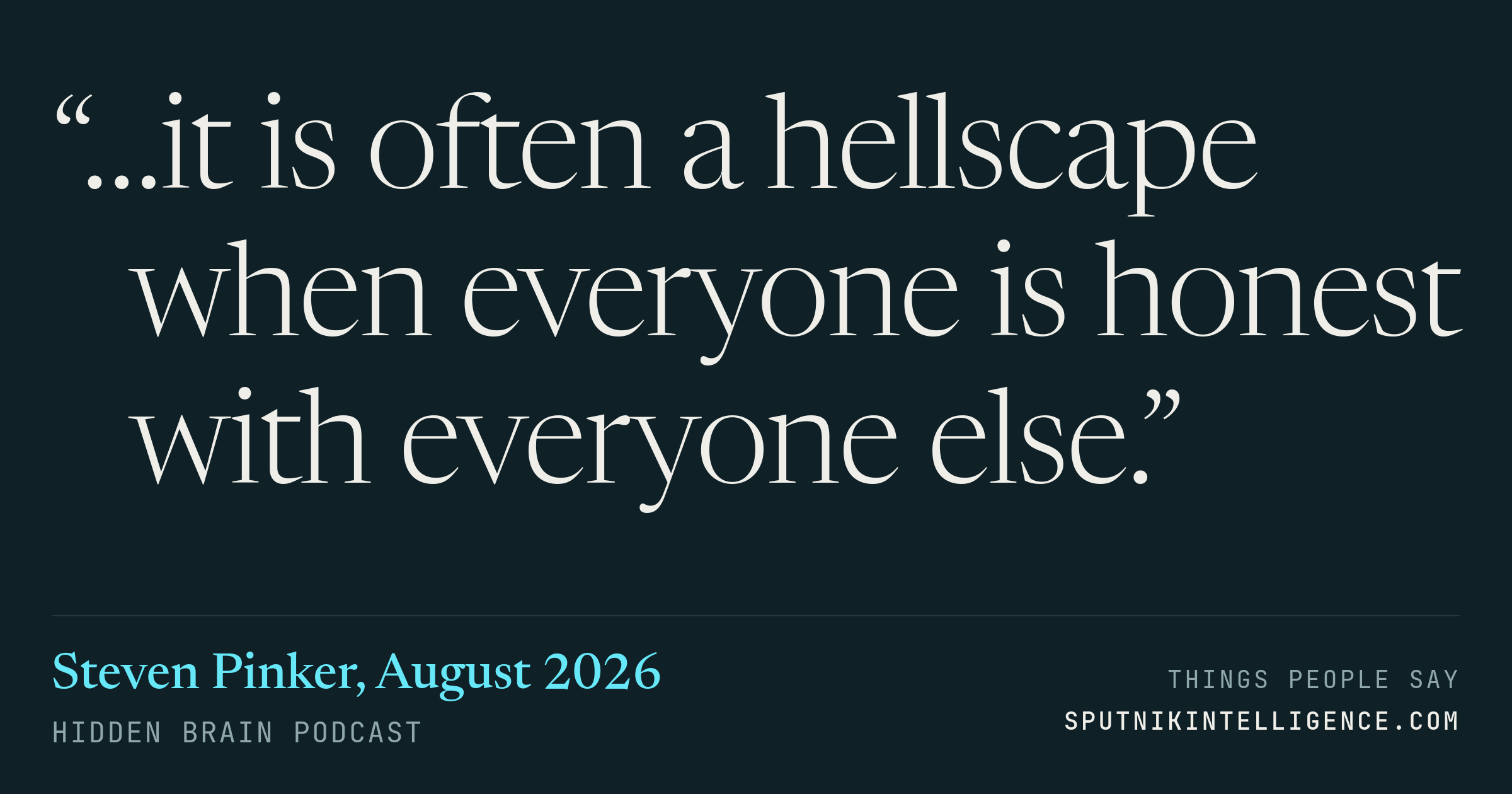
“…it is often a hellscape when everyone is honest with everyone else.”
Hidden Brain · Ideas & Essays · August 2026
Hidden Brain played a clip of a radical-honesty advocate describing a life with nothing held back, and Shankar Vedantam asked Pinker whether that works in practice. Pinker's answer was flat: to put it mildly, no. He argues that in a world of total candor there are no relationships left, only transactions, and reaches for Pascal's line that if everyone said what was on their minds there would not be four friends in the world.
Transcript
…to people and not be guarded and careful and protected and afraid of being found out. That's a lousy way to live. It's a better way to live, live out loud, let the chips fall where they may, have a few hard times now and then, but still they get all cleaned up because everybody tells the truth.
That does sound appealing, Steve. Do you think it always works in practice?
To put it mildly, no. That it is often a hellscape when everyone is honest with everyone else. And there are some comedies and science fiction plots that actually play that out for the amusement and sometimes the horror of an audience. But the reason that it doesn't is that this is a world in which there are no social relationships. Everything is transactional. There's no warmth. There's no friendship because all of us constantly have compromising thoughts about even our closest friends. Oh, that was a stupid comment. But blurting those things out just corrodes the tacit assumptions that make a friendship or a romantic relationship or even a stable relationship of respect of a supervisor and a supervisee stable and sustainable. If every thought was blurted out, then there would be no long-term stable relationships of cooperation.
You cite a French essayist and philosopher from the 17th century who wrote about what would happen if we were all open books. What does Blaise Pascal say?
He said that if everyone said what was on their minds, there would not be four friends in the world. And indeed, if there was a hidden microphone in my dining room in the kind of unbuttoned conversations that I have with my wife, my family, my close friends, and that was published tomorrow in the…
know what I wish just once, that a guy could be honest enough just to walk right up to me and say, hey, listen, you know, I'm confused about this too. I could lay a big line on you. We could do a lot of role-playing. But the simple truth is, I find you very interesting, and I'd really like to make…
More from Hidden Brain