Scott Anderson asked Fishman about de-risking, the way banks and companies over-comply with sanctions well past what the law actually requires. Fishman's answer is that a government cannot control where the private sector stops, which is why he rejects the 'precision-guided munition' analogy for targeted sanctions. Compliance officers at banks and oil companies, not the Treasury, decide how hard a sanction really bites.
…look, this is going to lead to some economic pain at home, but it's worth it to stop fentanyl from coming across our borders. Whatever his argument is, we don't hear those types of arguments, but we need them more if the use of economic warfare is going to be sustainable politically and successful.
…sort of engagement like true economic interstate warfare? And how do you calibrate to account for the double-edged sword of sanctions? The fact that if you start something in motion, the private sector may go even further with it than you want to in a way that will amplify negative effects.
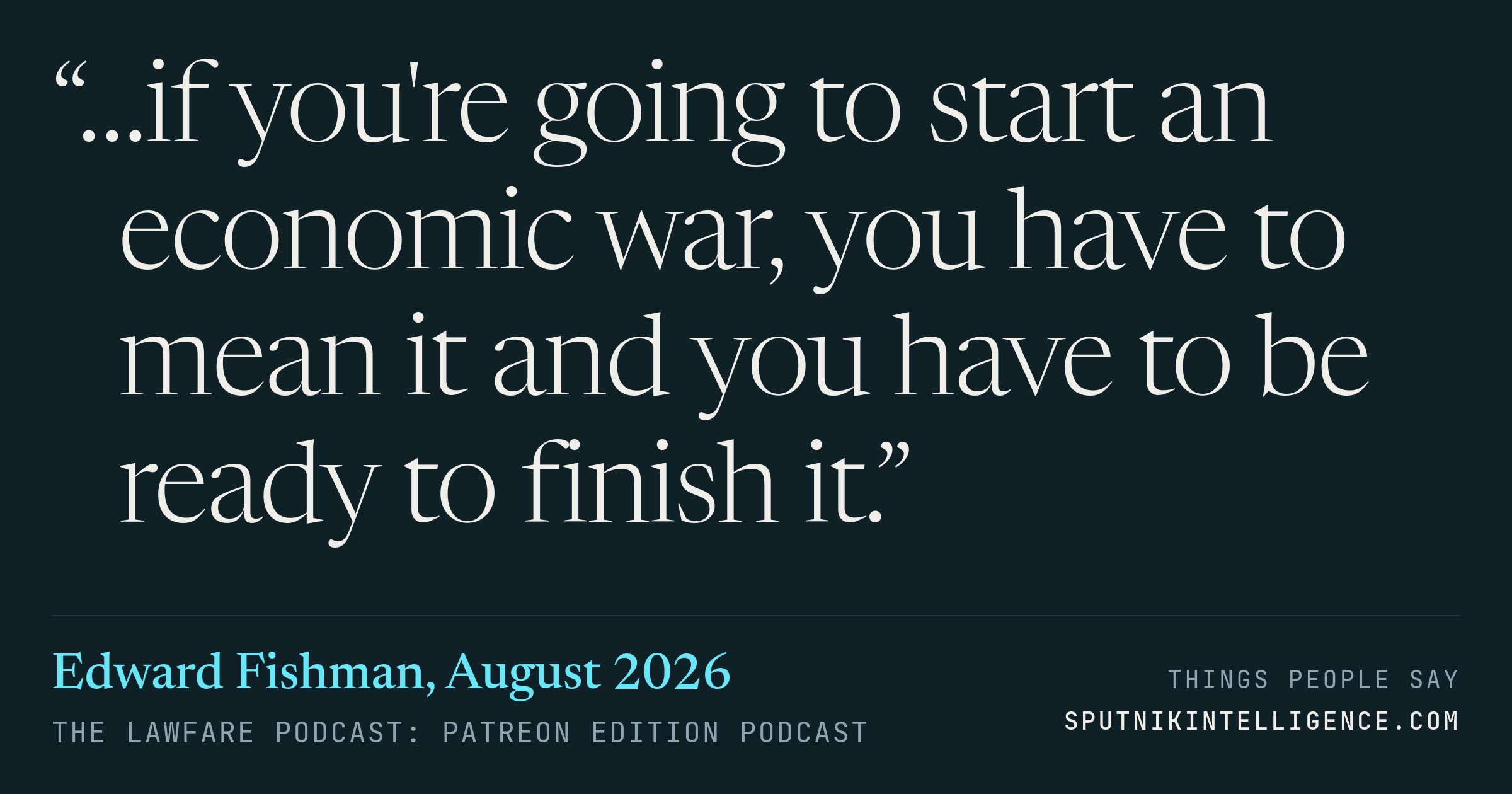
The short answer is: if you're going to start an economic war, you have to mean it and you have to be ready to finish it. What I mean by that is you don't know exactly what the private sector is going to react to. And that's one of the reasons why precision-guided munition is not, in my view, the best analogy for targeted sanctions, because the U.S. government doesn't actually even implement sanctions where the rubber meets the road. It's compliance officers at banks and technology companies and oil companies. And…
This question that you raise about how the narrative we spread is perceived by others in the international community and the impact that has on compliance, both among companies and also among states, really gets into another aspect that's been a big focus of sanctions conversations for the last few…
So I think the answer is that multilateralism is extremely important, but for not the reasons that people think it is. I think the mainstream view of this is that you need multilateralism to make sanctions effective in terms of their economic impact on a foreign government. So the argument would…
So that leads up to the other big issue that is always hanging over sanctions policy, which is this phenomenon of people leaving the dollar, the de-dollarization fear that Janet Yellen was concerned about, that it's still an ever-present concern. You know, in the book, I think you point out what I…