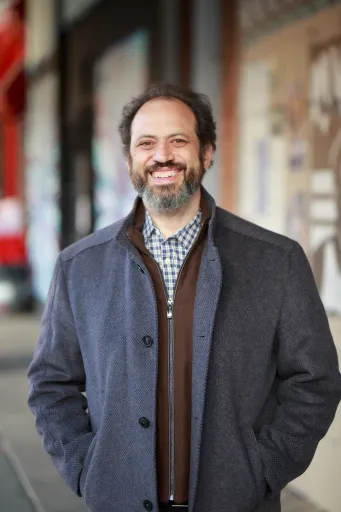
 Ethan Mollick
I am a professor at the Wharton School of the University of Pennsylvania.
“Junior people are much worse than AI, which means that junior people would be better off having AI do the work and they don't have the expertise to assess whether it's good or bad. ... So nobody learns anything anymore. The learning was incidental to the process, even if it was the point in the long term.”
Plain English with Derek Thompson · US Politics · October 2026
Derek Thompson asked about the "expertise paradox": AI makes experts more powerful while automating the junior work that creates experts. Mollick said apprenticeship has been how expertise was built for thousands of years, and that AI breaks the loop for both the juniors and the managers who used to give them feedback.
Transcript
…Navier-Stokes. So you don't even know what it can do capably. So Where’s this huge mismatch, the overhang, right, between AI capability and where people's perception of AI is. And people are making all sorts of predictions based on all kinds of missing assumptions. Kind of nobody knows anything.
…the idea that AI makes experts more powerful while often automating the kind of junior work that actually creates expertise. Maybe unpack a little bit about what you see here and how you think we're going to grow the next generation of experts if we're automating the process by which they are made.
…they get feedback as a result and they have to prove to you that they're good. And it's been this really nice cycle that works well under capitalism and under state planned societies and everything else, which is junior people want to strive to get ahead. We need someone to do the work for senior people who don't want to do it. And you learn as you go. And all of that broke down with AI because junior people are much worse than AI, which means that junior people would be better off having AI do the work and they don't have the expertise to assess whether it's good or bad. So they'll just turn in AI assignments. And the middle managers who used to be assigning work to junior people and giving them feedback, AI does a better job than that. It has no human emotions. So I'd rather just assign it to AI. So nobody learns anything anymore. The learning was incidental to the process, even if it was the point in the long term, right? So Where’s were very lucky that we had…
Not an easy thing to do at universities either. We had David Deming on this show a few months ago, and we talked about what I think is a really naughty problem of how do you teach artificial intelligence in a educational community that should be all about making thinking difficult so that people…
Okay, so this is what would my most controversial point. And so the academics don't say, but I don't think this is that hard a problem. I think transitioning to the state we need to be in is a harder problem. But we actually have a lot of control over people in universities and K-12 education. And…
Does the last thing you just said suggest that professors should be much more aggressive about limiting, even prohibiting any kind of AI use because there is no benefit to becoming FASA with the technology between 18 and 22. At college, your job is just to become good at learning. And when you…
More from Plain English with Derek Thompson