Collection · US Politics

Things People Say on Podcasts About US Politics

Podcasts and newsletters on US politics: elections, Congress, the White House, campaigns, polling, courts and state politics, including partisan talk shows from both sides and interview shows where US politicians appear as guests.

Everything worth repeating from the US Politics shows we follow. Updated every day — free to search and free to use, attribution included on every card.

405
Quotes
374
Shows read
8
People quoted
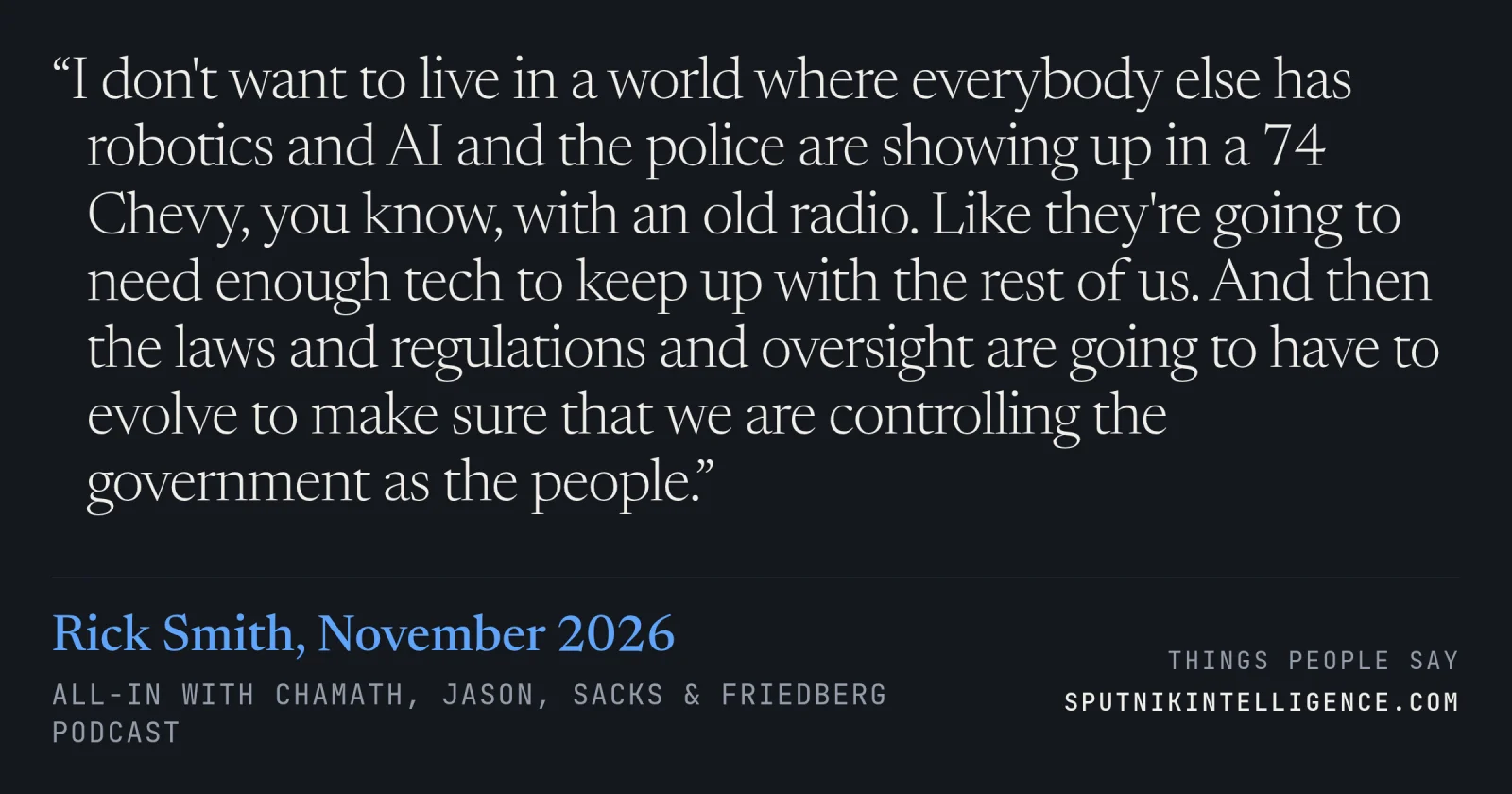
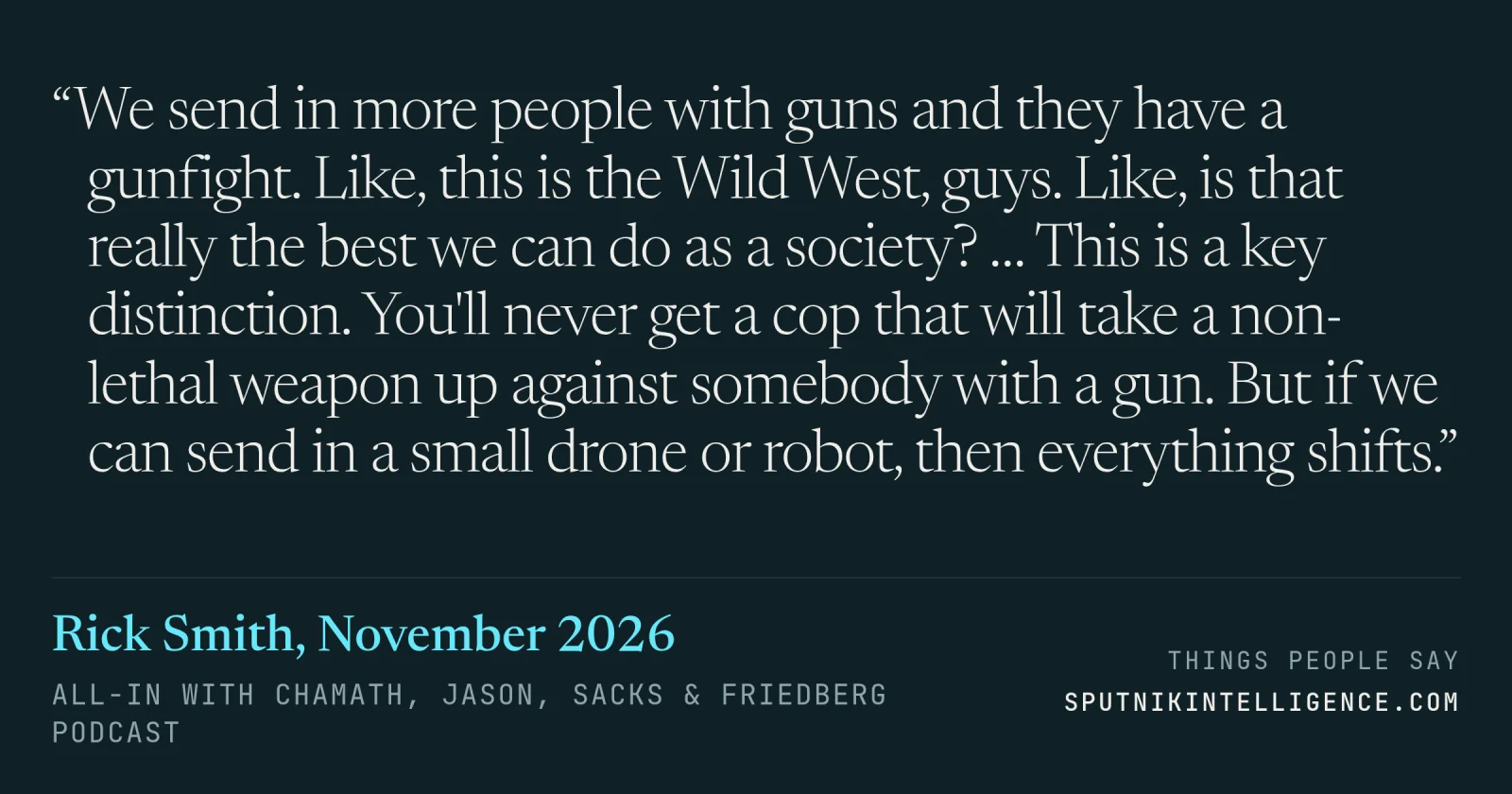
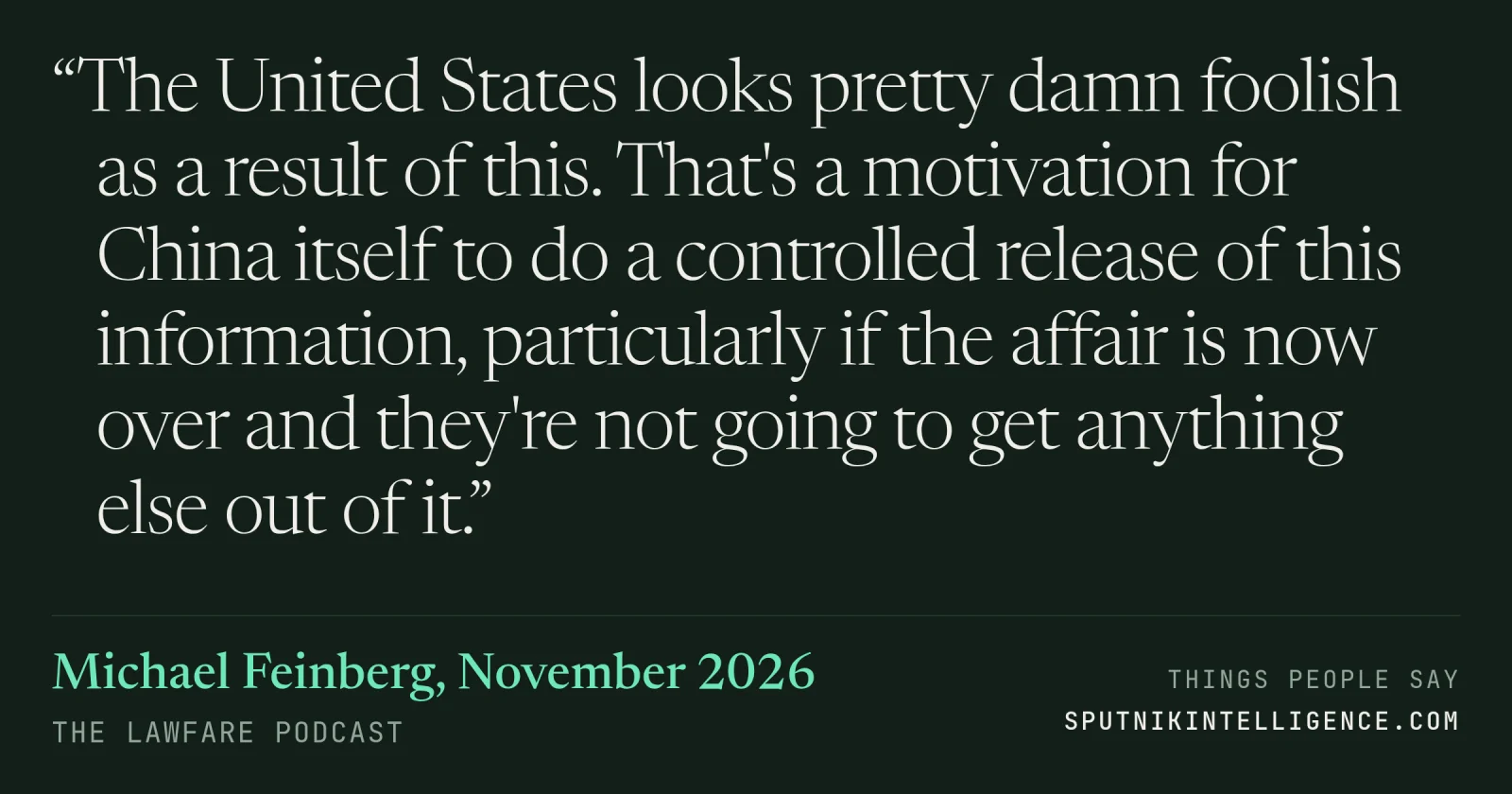
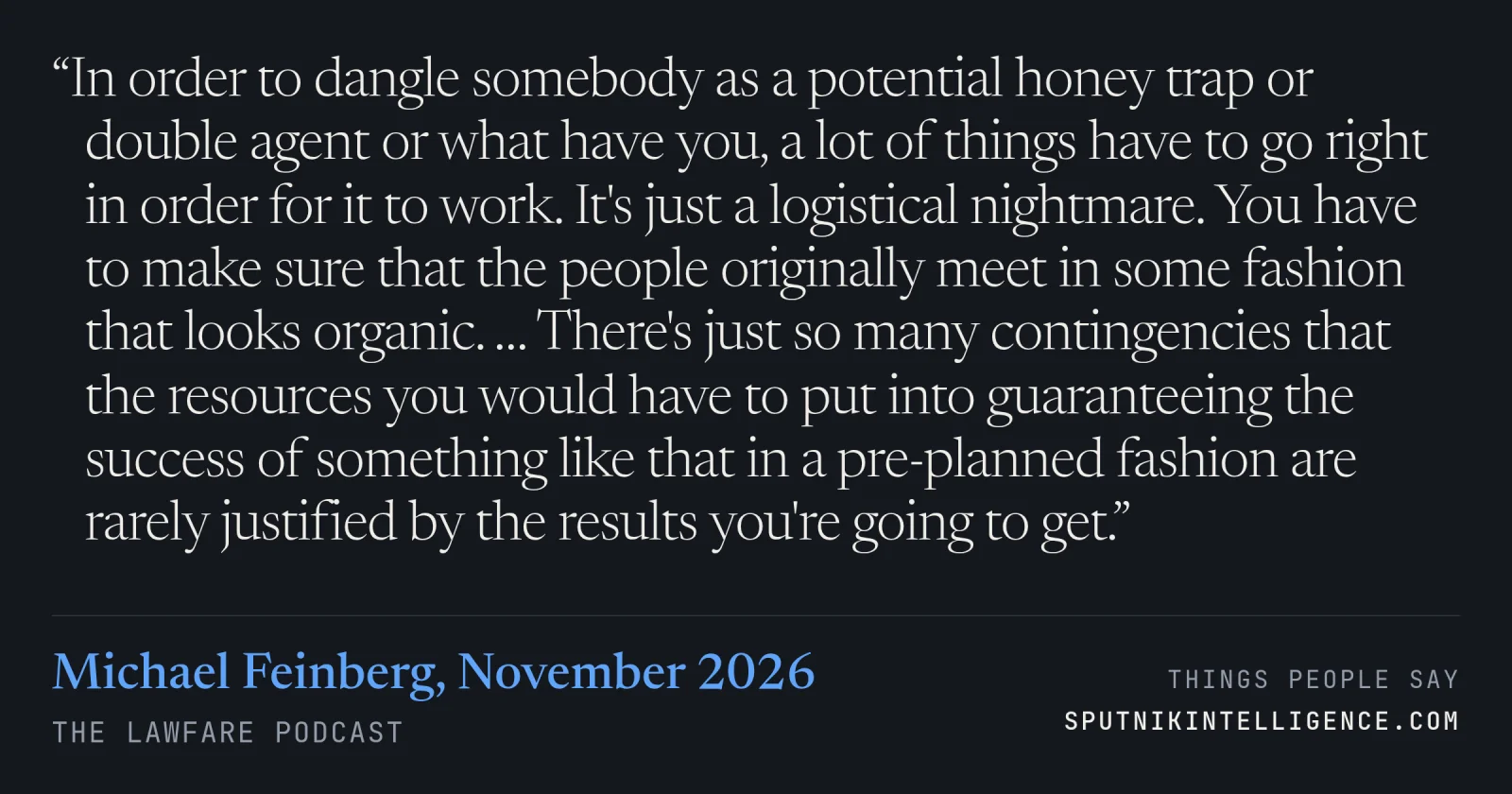
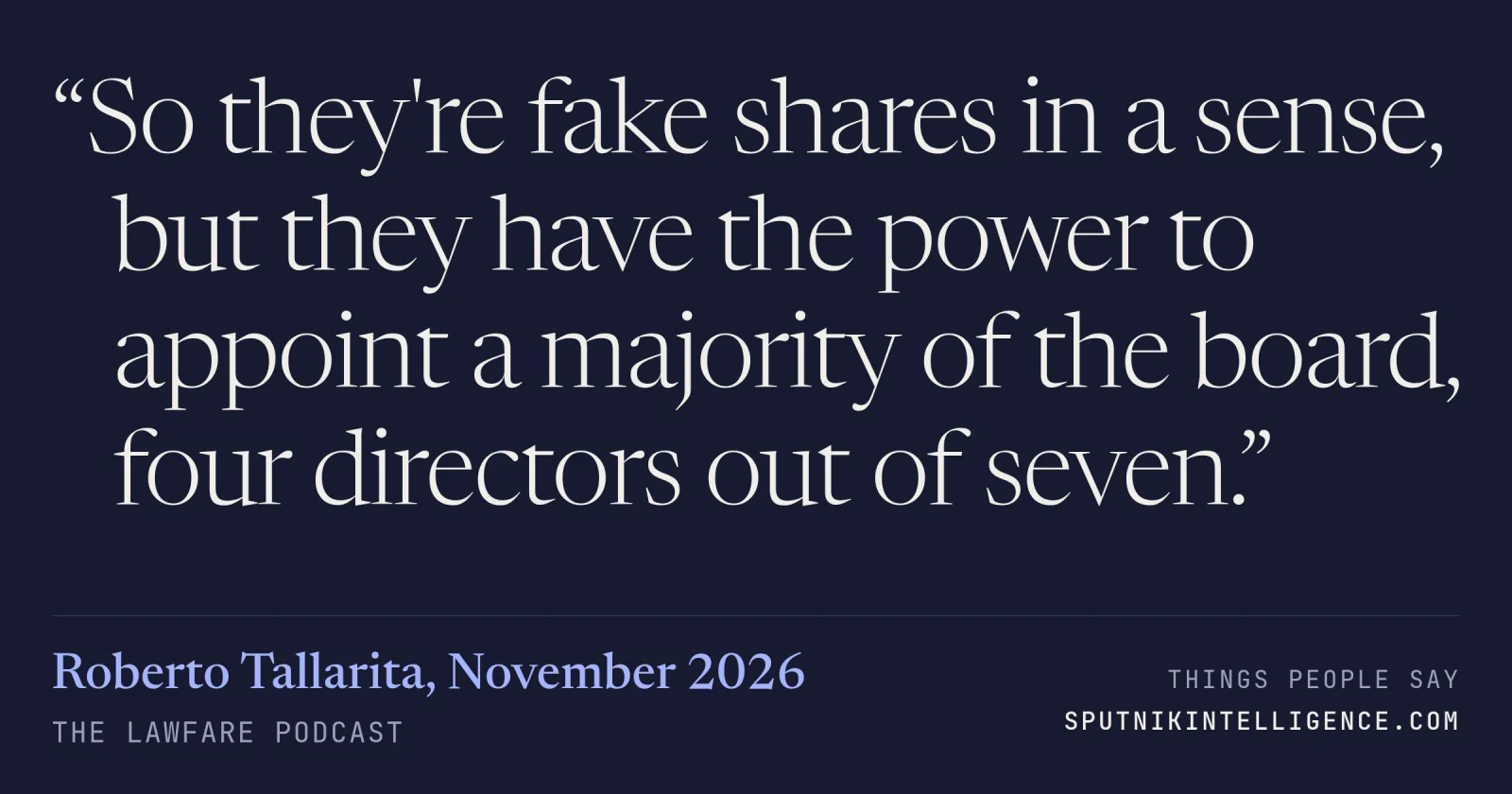
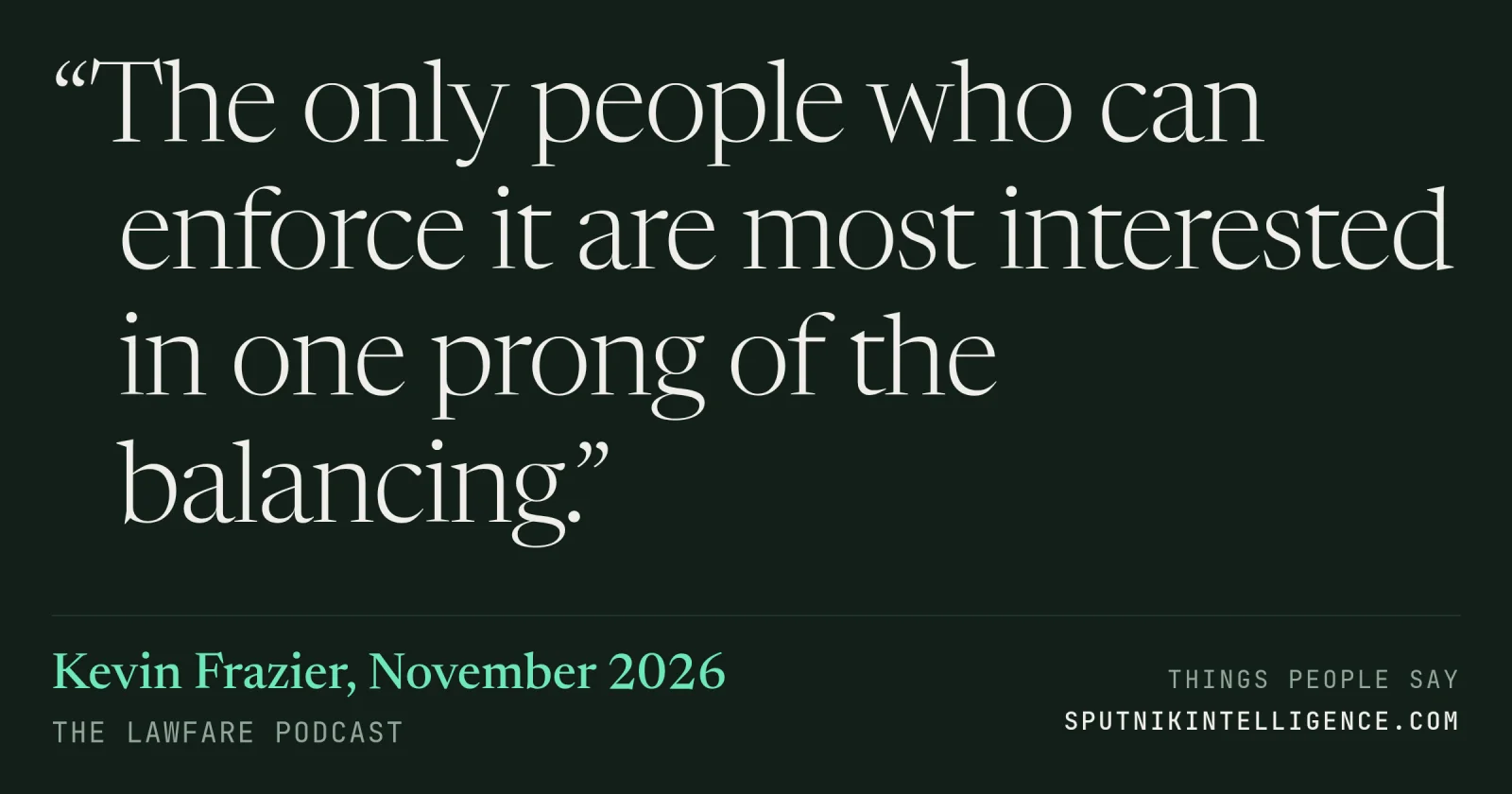
“We are not forcing the party identification of our polls to be anything. I have no idea what the party identification of the electorate was in Texas in 2024 or 2026. If that was a D plus two electorate in our final poll or an R plus 10, we had nothing to do with that.” — Nate Cohn, GD POLITICS “We work for the New York Times. We're supposed to be an authoritative source of information, the truth. Polling can't really live up to that. So we always have to hedge. We don't know whether it's going to be right until the results come in. We've certainly been wrong before.” — Nate Cohn, GD POLITICS “In the Russian system, the general staff takes the best and the brightest officers at quite an early age, late 20s, early 30s. You separate them from the branches and put them into the General Staff academies. It's basically its own profession. Whereas the Joint Staff in the US is significantly smaller than the general staff, which is maybe 10,000 in total or such, whereas the Joint Staff is around 1,500. Rough numbers.” — Oscar Jonsson, The Lawfare Podcast “The general staff got responsibility for planning, but only the authority to coordinate with all the other agencies, which basically is nothing. You can call someone and say, hey, screw you, and then you have coordinated. Whereas if you command, you have the authority to send them places.” — Oscar Jonsson, The Lawfare Podcast “At no point did the Russian Chief of General Staff publicly stand up and say, hey guys, if we want to invade the largest country in Europe, then it's not going to cut it with 120,000 men. And by the way, we're a mobilization force, we need to mobilize, which is none of what happened. It was quite obvious that it was a security services plan: we're going to walk in there with a coup d'etat, we're not going to face serious resistance, it's going to be over in 10 days.” — Oscar Jonsson, The Lawfare Podcast “They treat the government like a startup. They move into the General Services Administration's headquarters with Musk and sleep on cots or the floor. They're sent off every day and told to come back with scalps: people you fired, contracts you've cut. If you're an excellent civil servant, what it looks like is insanity. A 25-year-old showing up with a badge, demanding access to the computers, and cutting the government in the most arbitrary ways, just looking at an org chart and circling stuff that sounds bad.” — Michael Lewis, Prof G Media “Things are being way, way, way oversold. Most of what's being oversold has very little to do with what I would consider legitimate psychotherapy. There's therapy culture, which really comes from pop culture and internet influencer culture, and there's legitimate psychotherapy. Most of what's being promoted in the culture now as therapy is social media, pop, insta-therapy.” — Jonathan Shedler, Prof G Media “AI, I have no idea if the doomsayers are right, and I'm just not even thinking about that. What I'm thinking about is that we have a concept we call ABCD. … always be collecting dots so you can always be connecting dots. And the dots are pieces of information about people so that we can customize experiences, which is what I think hospitality is. And we have never had a greater dot collecting agency than AI. It's almost malpractice to not know who you're serving in the restaurant.” — Danny Meyer, On with Kara Swisher “I think also all these round-tripping deals between and among these AI companies was troublesome with Jensen and NVIDIA at its center. … I worry about the Jenga of it all. Like if something happens to NVIDIA, the rest of them go down, right? Because of the cross-investments.” — Kara Swisher, On with Kara Swisher “I would argue that just this story has cost NVIDIA a trillion dollars. Just a story, because all the other chip stocks were up 10%. … That's a very costly mistake.” — Gil Luria, Prof G Media “It looks like an old Game Boy. It has a screen on it. So you're driving down the road in Ukraine, watching the screen. It turns on and it is the enemy's view of the drone. … It's literally watching the feed of the Russian soldiers that are hunting you. Just about everybody along the front has that right now. It's just a weird dynamic that's brand new to war.” — Preston Stewart, Lex Fridman Podcast “I often see it abstracted in conversations, a sense that the United States is number one, and China's number two, and Russia's maybe number three or four or five, wherever you want to put it. But there's no such thing. Military power requires a context to express itself, right? … It actually really matters what the scenario is because the geography matters, the political objectives matter.” — Michael Kofman, Lex Fridman Podcast “In some ways, we are fortunate that they have such a cultural falsification of battlefield data because they then organize fire support around lines and positions they don't actually hold. … They'll end up having their own soldiers killed because the map they were given is not correct.” — Michael Kofman, Lex Fridman Podcast “There's been about a three to four month cycle of evolution of technology and tactics in this war between Russian and Ukrainian forces, and they iterate fairly quickly. … Ukraine has often led in terms of tactical development and bottom-up innovation because of the way Ukrainian units all experiment on their own. They're kind of all defense startups. They all have kind of their own R&D section. … Russian military was slower, but Russia had, in some ways, more capacity and tended to be better at scaling a solution once they identified it.” — Michael Kofman, Lex Fridman Podcast “For FPVs, it's probably somewhere eight to 10,000 per day, just those, not including other types of tactical drones. And that would be for one side of the war. So, to give you a sense that these are hundreds of thousands of these being employed per month.” — Michael Kofman, Lex Fridman Podcast “Most of this war are systems that are remotely operated, but they are operated by people. It is actually quite manpower-intensive. … I hate to take away from the autonomy and artificial intelligence conversation. This war is testing that … but to some extent, it's been overhyped in terms of the percentage of the fight that's actually being run that way. It is very much still a human-centric war with a lot of manpower involved, running, operating, and maintaining all of these capabilities.” — Michael Kofman, Lex Fridman Podcast “Technocracy can't deliver on its own promise, and even its own promise is a significant cost from a democratic point of view.” — Jedediah Purdy, The Lawfare Podcast “I think the democratic idea is very closely connected with the thought that we should be able to think of our future as a choice rather than a fate. Even a good fate loses a lot relative to a similarly decent future that we've been able to choose.” — Jedediah Purdy, The Lawfare Podcast “A police union leader told me famously, he said, no cop wants to wear a body camera until they've worn one for 90 days, and then they will not go on patrol without it. Because what you don't realize, police are arresting criminals all the time. And criminals have no compunction about lying about what happened. The number of false allegations are incredible.” — Rick Smith, All-In with Chamath, Jason, Sacks & Friedberg “I don't want to live in a world where everybody else has robotics and AI and the police are showing up in a 74 Chevy, you know, with an old radio. Like they're going to need enough tech to keep up with the rest of us. And then the laws and regulations and oversight are going to have to evolve to make sure that we are controlling the government as the people.” — Rick Smith, All-In with Chamath, Jason, Sacks & Friedberg “We send in more people with guns and they have a gunfight. Like, this is the Wild West, guys. Like, is that really the best we can do as a society? … This is a key distinction. You'll never get a cop that will take a non-lethal weapon up against somebody with a gun. But if we can send in a small drone or robot, then everything shifts.” — Rick Smith, All-In with Chamath, Jason, Sacks & Friedberg “The United States looks pretty damn foolish as a result of this. That's a motivation for China itself to do a controlled release of this information, particularly if the affair is now over and they're not going to get anything else out of it.” — Michael Feinberg, The Lawfare Podcast “In order to dangle somebody as a potential honey trap or double agent or what have you, a lot of things have to go right in order for it to work. It's just a logistical nightmare. You have to make sure that the people originally meet in some fashion that looks organic. … There's just so many contingencies that the resources you would have to put into guaranteeing the success of something like that in a pre-planned fashion are rarely justified by the results you're going to get.” — Michael Feinberg, The Lawfare Podcast “Even if the Chinese got nothing about NVIDIA Tech and nothing about the company itself, she could have been mining during pillow talk or everyday conversation insights about the vulnerabilities that powerful Americans possess. And that could be filed away by the Chinese intelligence services and sometime, maybe years from now, be exploited.” — Michael Feinberg, The Lawfare Podcast “So they're fake shares in a sense, but they have the power to appoint a majority of the board, four directors out of seven.” — Roberto Tallarita, The Lawfare Podcast “The only people who can enforce it are most interested in one prong of the balancing.” — Kevin Frazier, The Lawfare Podcast

Most Quoted Here