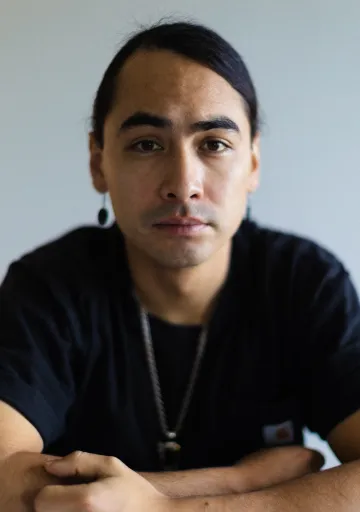
 Julian Brave NoiseCat
The first Indigenous North American filmmaker nominated for an Academy Award and the first Indigenous North American author to write about healing from intergen...
“There's this kind of assumption that tribes are kind of like the first environmentalists or that they're kind of like the Indigenous face of the environmental movement in Washington. … In reality, for many of these issues that have often been classed as native environmental concerns, there are actually even in many of them tribes on the opposite side of the issue.”
Heatmap News · Climate & Energy · November 2026
Context
The host noted that many Indigenous communities want development, fossil fuels included. NoiseCat agrees, pointing to tribes that support the permitting bill and to tribes on both sides of the Arctic refuge fight.
Transcript
…that does not appear to have been a winning strategy anymore. But a version of a federal system wherein tribes are consulted and then also potentially use that position of power to become increasing parts of the economy in their region. That I think is a real potential path forward. Aaron Powell,
…communities that would love to develop. And there's actually a lot of Indigenous communities that would love to develop slash are already developing fossil fuels. And so the fossil fuel trade-offs in this bill are trade-offs they would accept because they want to be doing development too.
…explicitly come out in favor of the bill. We mentioned the Coalition of Large Tribes. There, in general, I would say, are benefits to this bill. If you are interested in developing energy on your homelands and you're a tribe, there's actually a lot of red tape involved with that from the Interior Department. And this bill makes it easier to do that development if you're a tribe. I think that there's this kind of assumption that tribes are kind of like the first environmentalists or that they're kind of like the indigenous face of the environmental movement in Washington. I think that there's been the overwhelming way in which the left of center part of the conversation has engaged with tribes. And in reality, for many of these issues that have often been classed as like native environmental concerns, there are actually even in many of them tribes on the opposite side of the issue. So like the Wilderness Society approached me with some money to be part of their…
are trying to develop data centers now on the North Slope. I could be wrong. I'm
sure. So, you know, I think my broad point here is that it's very interesting that tribal concerns remain central to this bill, despite the fact that that's being undercovered because very few newspapers, magazines cover tribal concerns. They are the kind of issue, interestingly, that when you move…
What do you wish was different about the coverage here/slash the whole discussion? Because I think one aspect that I would observe is that the degree to which these tribal issues were initially covered as I realize I'm repeating something you just said, but the degree to which tribal issues were…
More from Heatmap News