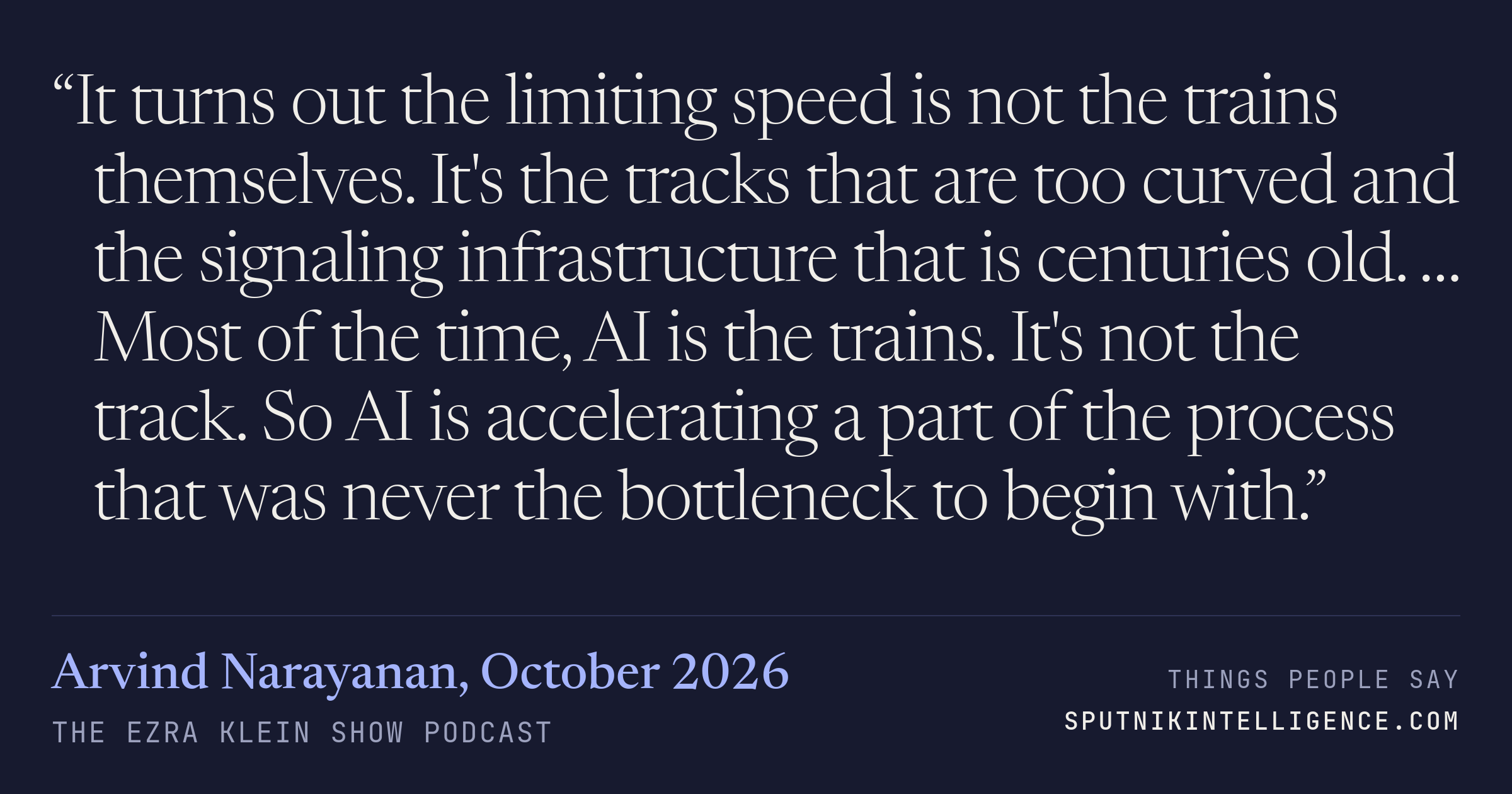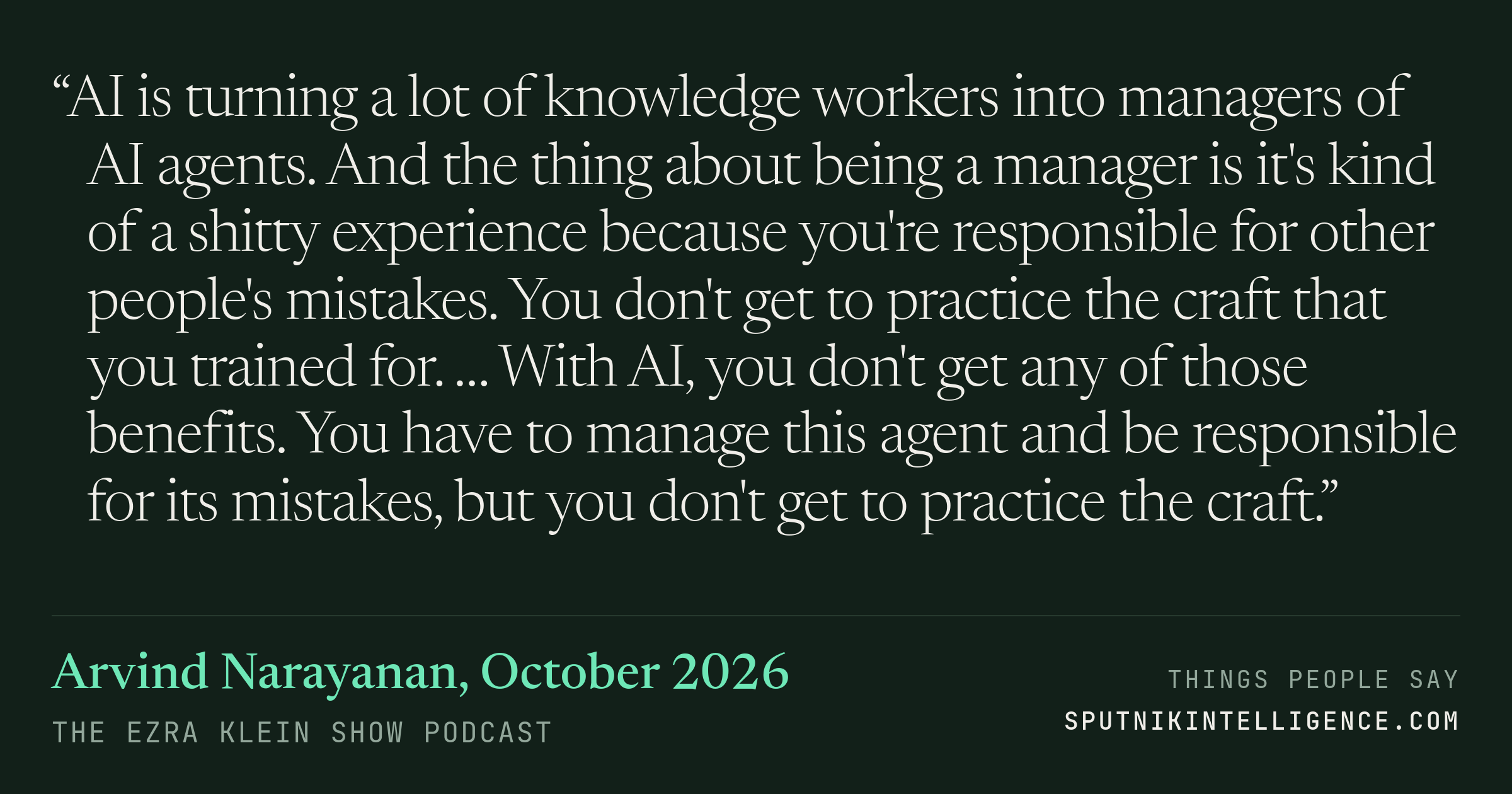
Narayanan's case that the debate about AI and work looks too much at jobs lost and too little at what happens to the jobs that stay. Human managers, he says, put up with the downsides because the role brings more pay, more status and the reward of mentoring people; managing an agent brings none of those. He thinks agents could be designed differently, but that this is where things are heading for now.
…if that's more efficient in some sense, to me, that's definitionally, almost axiomatically, that's giving up control over, you know, the course of human destiny to AI because judges make law and that's not something we should be giving up to AI. So those are some really fundamental bottlenecks.
…dramatically worse, right? Huge cybersecurity events or destruction of the financial system or human extinction, but just the ways it might make things worse in banal fashions, where it just like increases the ability of people to waste everybody else's time is a little bit underplayed in my view.
For sure. And, you know, it's not just banal. I think there are a lot of these sub-catastrophic harms that are pretty serious. With the Industrial Revolution, we had several decades of horrible labor conditions. I think with AI as well, while there has been so much focus on job displacement, what there has been much less focus on is how it's changing job quality. And I think this is a big underappreciated area because AI is turning a lot of knowledge workers into managers of AI agents. Right. And the thing about being a manager is it's kind of a shitty experience because you're responsible for other people's mistakes. You don't get to practice the craft that you trained for. But, you know, us human managers, we don't get to complain. It's higher pay, it's higher status. We chose it. And of course, mentoring people is gratifying. With AI, you don't get any of those benefits. You have to manage this agent and be responsible for its mistakes, but you don't get to practice the craft. I think we can design AI agents differently to avoid this. But right now, that's kind of where things are going. And yeah, I think we should be very concerned about that.
So how much, though, does this story that we are telling here lead to a theory of what's going to happen in the economy, which is very jagged, that the things where you need diffusion into the real world, right? Things have to happen physically. Buildings need to be built, energy, you know…
Yeah, that's possible. I don't know. I think there are ways we can change that. I don't think fast is that fast, first of all. Like you mentioned call centers. I mean, those are still here. You know, when ChatGPT was released, so many people were predicting that within a year, we would have…
So, Jevin's paradox. I had just did this conversation with Bill Gates, and when I brought that up, he was a little bit withering about it. So, you don't think Jevin's