
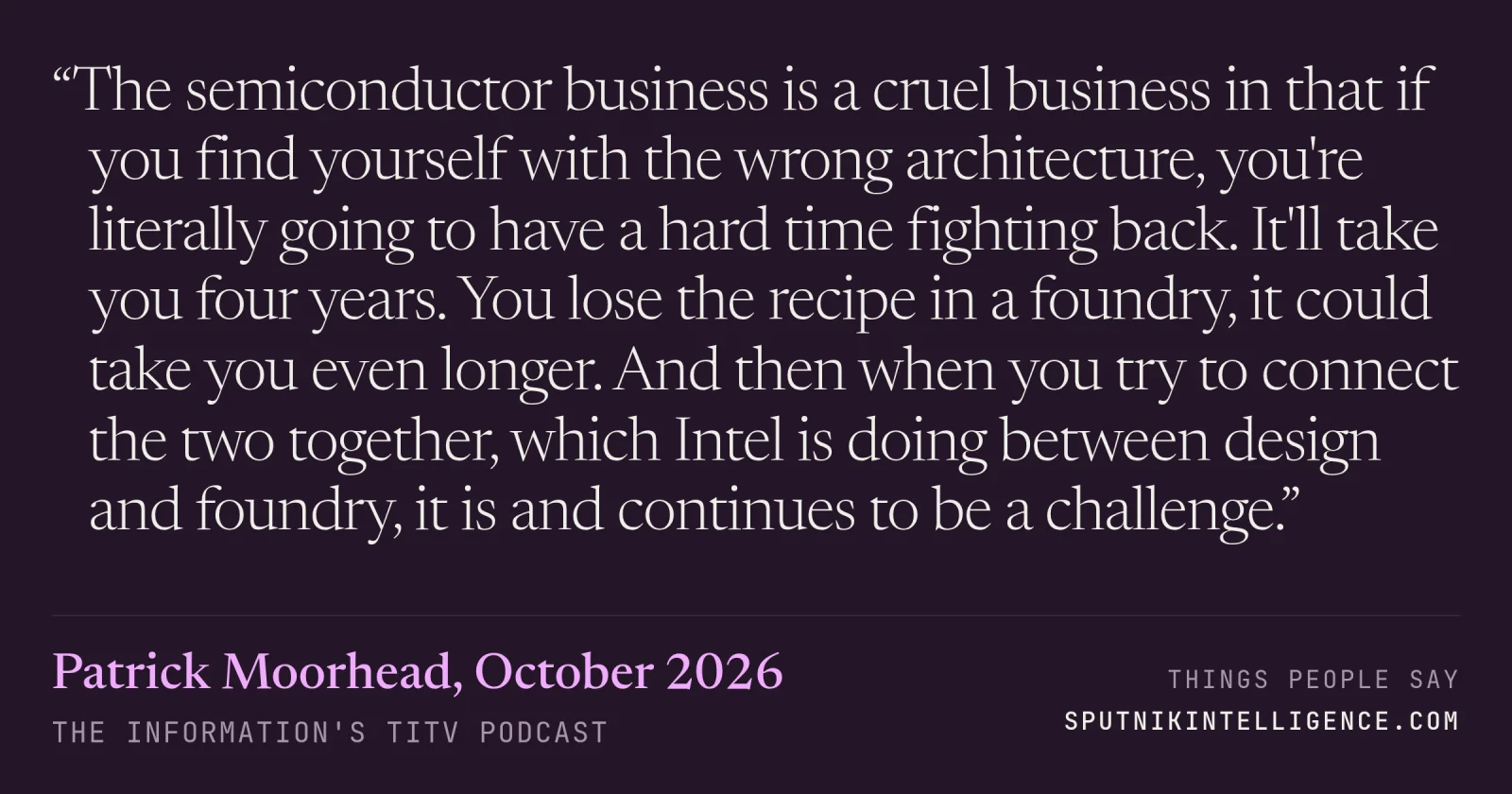

Asked how other chip companies will fare given the memory and substrate shortages that hit Intel, Moorhead says the whole industry stays supply-constrained for years.
…PC market, though, is that demand is not gone. Let's say you had a five-year-old PC and you looked at memory prices and you're about to pull the trigger on a new one and you're like, ah, I'm going to wait. Like, you can't, PCs don't live seven, eight, nine, 10 years. I mean, some do, but not a lot.
Right. But just very quickly, so you talk about AMD, but what about all the other chip companies that inevitably do rely on the same memory in many cases?
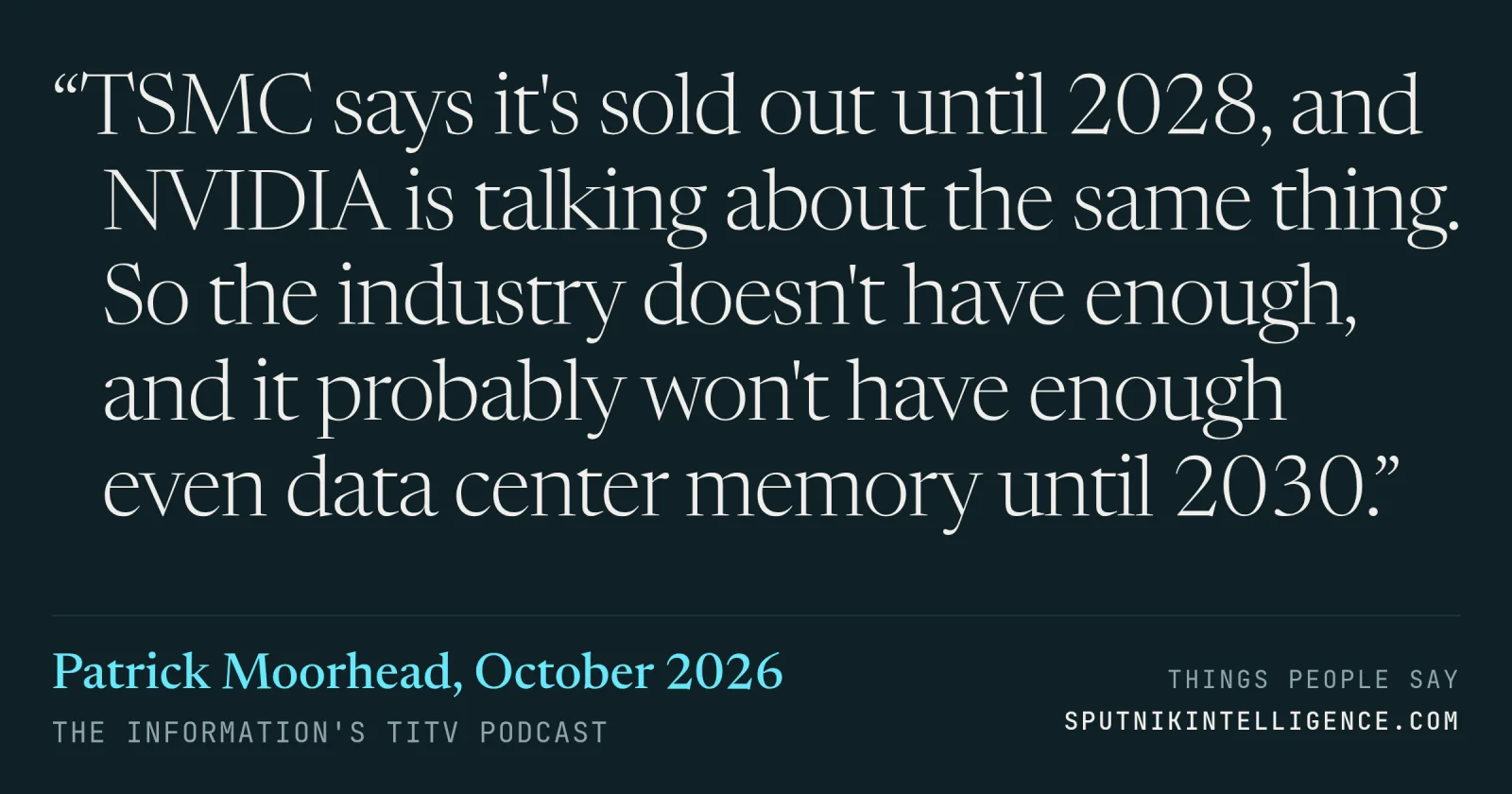
Yeah. So I think NVIDIA has taken care of substrates. They were in their first cut deals, even two chains deep with the Japanese sub-suppliers of substrates. I think they're going to be fine. I think a lot of folks who are tied into TSMC are going to be good on wafers. I mean, there's never going to be enough. TSMC says it's sold out until 2028, and NVIDIA is talking about the same thing. So the industry doesn't have enough, and it probably won't have enough even data center memory until 2030.
Great. Well, Patrick, I want to thank you for coming on. That is Patrick Moorhead from More Insights and Strategy here on TI TV.
Thanks.
AWS revenue continued to accelerate in Amazon's third quarter, but the rest of Amazon's business segments, like its online marketplace and advertising, decelerated in some cases dramatically. Here to discuss the results is Ken Gawrelski, Managing Director, Senior Internet Analyst at Wells Fargo.…